Top 10: Small Cell Vendors
The telco sector is currently experiencing a radical transition as the global appetite for ultra-reliable, high-capacity data continues to soar.
To maintain a competitive edge, operators are finding that traditional macro-site strategies are no longer sufficient on their own. Small cells have surfaced as the indispensable foundation for modern networks, providing the necessary precision for deep urban penetration and high-performance indoor coverage.
These platforms are enabling telecom providers to optimise operational costs while significantly reducing the deployment cycles for next-generation services, primarily through the integration of AI and virtualised architectures.
As network topology grows more intricate in the lead-up to 6G, choosing a strategic small cell partner has never been more vital. In this feature, Telco Magazine ranks the Top 10 small cell vendors defining the future of global mobile infrastructure.
10. Airspan Networks
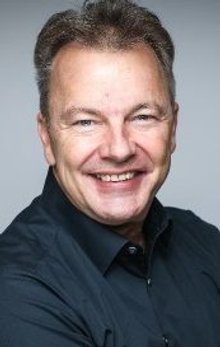
CEO: Glenn Laxdal
Founded: 1998
Location: Florida, USA
Airspan Networks remains a pivotal player for operators prioritising flexible, software-defined infrastructure. As a long-standing advocate for the Open RAN ecosystem, they have secured a significant foothold in the North American market, particularly within the CBRS space.
Their expertise in hyper-dense urban environments and fixed wireless access makes them a leading vendor for network automation. Their platforms enable the seamless, automated configuration of small cells in complex topographies where traditional macro-cell deployment is either unfeasible or economically restrictive.
9. Mavenir
CEO: Pardeep Kohli
Founded: 2005
Location: Texas, US

Mavenir continues to challenge industry norms with its cloud-native philosophy regarding small cell architecture. By decoupling radio software from proprietary hardware, they enable operators to execute critical network functions on standardised COTS equipment, representing a significant advancement in network automation.
Their solutions incorporate AI-driven telemetry to automate load balancing and intelligent traffic steering across multi-layered dense networks. This virtualised focus makes them an indispensable partner for greenfield operators and enterprises aiming to deploy highly agile, automated private 5G networks.
8. Corning
CEO: Wendell Weeks
Founded: 1851
Location: Corning, New York, US
While historically associated with materials science, Corning’s Everon portfolio has established them as an indoor wireless authority. Their small cell solutions are distinct because they utilise a fibre-to-the-edge architecture, which simplifies the automation of signal distribution across massive campus environments.
By merging cellular coverage with a building’s existing optical backbone, Corning facilitates the automated management of both data throughput and power delivery. This convergence is essential for smart infrastructure, where small cell nodes must automatically adapt to fluctuating IoT device densities.
7. Commscope
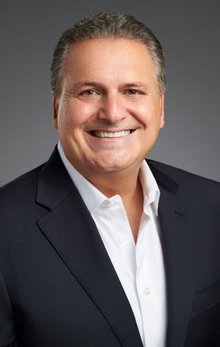
CEO: Charles Treadway
Founded: 1976
Location: North Carolina, US

CommScope leads at the intersection of Distributed Antenna Systems (DAS) and advanced small cell technology. Their OneCell architecture is a benchmark for automation, managing multiple radio points as a unified "distributed" cell to mitigate handover failures and signal interference.
This specific architectural logic allows the network to automatically reallocate resources based on live user demand. CommScope offers a resilient, automated bridge between enterprise IT requirements and the rigorous performance standards of 5G-Advanced for large-scale venue owners and tier-1 carriers.
6. ZTE
CEO: Xu Ziyang
Founded: 1985
Location: Shenzhen, China
ZTE is a massive force in the high-capacity small cell market, maintaining a dominant presence throughout Asia and emerging markets. Their QCell indoor solution is highly regarded for its rapid deployment capabilities and spectral efficiency.
ZTE has made significant progress in network automation by embedding "green" AI algorithms that permit small cells to enter deep sleep during low-traffic hours, automatically reactivating as user demand spikes. This emphasis on automated energy management, paired with competitive pricing, keeps them at the forefront of densification.
5. Samsung Electronics
CEO: Tae-moon Roh
Founded: 1969
Location: Suwon-si, South Korea

Samsung has evolved from a market challenger into a primary pillar of the global small cell landscape. Their fully virtualised RAN (vRAN) solutions are currently operating at scale with major carriers like Verizon.
Samsung’s core strength is its ability to automate the entire small cell lifecycle, from initial zero-touch provisioning to sophisticated AI-based self-healing protocols.
By utilising their deep vertical integration in semiconductors and software, they deliver high-performance nodes that can be managed automatically, reducing the long-term operational expenditure of network maintenance.
4. Huawei
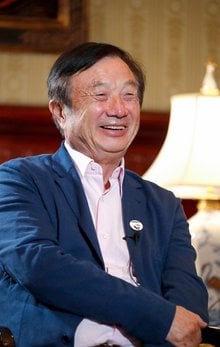
CEO: Ren Zhengfei
Founded: 1987
Location: Shenzhen, China
Despite various regional geopolitical restrictions, Huawei’s technical mastery of small cell engineering remains industry-leading. Their LampSite 5.5G solutions lead the sector in raw throughput and link stability.
Huawei’s R&D focus on 5G-Advanced has resulted in the creation of sensing small cells that can automatically monitor environmental changes using radio waves.
Their automation suites employ advanced machine learning to refine beamforming in real-time, positioning them as a primary driver of network excellence in the world’s most connected urban centres across the Middle East.
3. NEC & Rakuten Symphony
CEO: Takayuki Morita (NEC) and Sharad Sriwastawa (Symphony)
Founded: 1899 (NEC) and 2021 (Symphony)
Location: Tokyo, Japan

The collaboration between NEC and Rakuten Symphony embodies the state of the art in automated, cloud-native networking. They have demonstrated that a completely automated, Open RAN-based small cell layer can manage immense traffic volumes with negligible human intervention.
Their Symworld platform facilitates the automated orchestration of tens of thousands of small cells through a unified management interface. This "telco transformation" strategy makes them the premier choice for operators looking to abandon legacy hardware silos in favour of a fully automated, software-centric operational future.
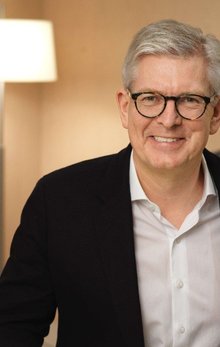
2. Ericsson
CEO: Börje Ekholm
Founded: 1876
Location: Stockholm, Sweden
Ericsson has long served as the industry benchmark for carrier-grade small cell reliability. Their Radio Dot and Street Radio systems are foundational components in global tier-1 networks.
Ericsson continues to innovate with AI-native radio units. Their 2026 portfolio prioritises intent-based networking, where the small cell layer automatically decodes the specific requirements of an application, such as industrial robotics or immersive XR, and fine-tunes latency and bandwidth without manual input.
This level of automated traffic steering ensures they remain a top choice for mission-critical infrastructure where high-performance reliability is the absolute priority.
1. Nokia
CEO: Justin Hotard
Founded: 1865
Location: Finland

Nokia secures the top position this week, propelled by its remarkable expansion in the private 5G and industrial small cell markets. Their AirScale portfolio has emerged as the definitive choice for enterprises requiring sovereign networks that balance openness with robust security.
Nokia’s Digital Automation Cloud (DAC) offers a plug-and-play small cell environment that allows ports, mines and factories to automate their industrial operations in record time.
By leading the charge in security-focused Open RAN and investing heavily in mmWave innovation, Nokia has established itself as the most versatile vendor for the 5G-Advanced era.
Their ability to provide high-performance, automated connectivity within the world’s most demanding industrial settings makes them the current market leader.
Company portals






Executives
Börje Ekholm
President and CEO
Charles Treadway
CEO
Glenn Laxdal
President and CEO
Justin Hotard
President and CEO

Pardeep Kohli
President & CEO
Ren Zhengfei
Founder and CEO
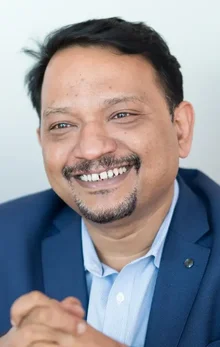
Sharad Sriwastawa
CEO
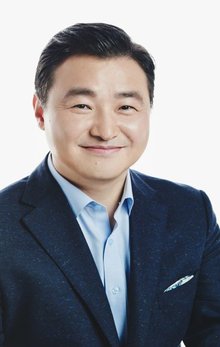
Tae-Moon Roh
Head of Device eXperience (DX) Division
Takayuki Morita
President and CEO (Representative Director)
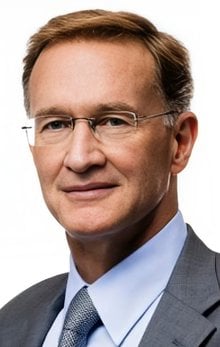
Wendell Weeks
CEO
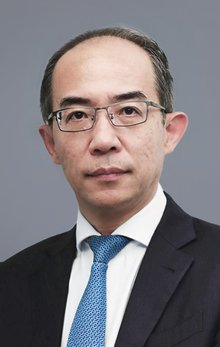
Xu Ziyang
CEO