Top 10: Smart City Connectivity Vendors
The definition of a smart city has evolved from simple sensor networks to complex, agentic ecosystems that manage resources autonomously.
This shift represents a move for connectivity vendors towards becoming the essential orchestrators of urban intelligence.
The leaders in this space are no longer just selling connectivity, they are providing the low-latency, high-reliability fabric required for autonomous transport, real-time digital twins and energy-efficient infrastructure.
With 5G-Advanced (5.5G) now reaching maturity and initial 6G trials underway, the competition amongst vendors has intensified.
This Top 10 reflects a market that prizes network programmability, edge computing integration and sovereign data security. Our list evaluates these vendors based on their technological innovation, strategic leadership and the global scale of their smart city deployments.
10. AT&T
CEO: John Stankey
Founded: 1885
Location: Dallas, Texas, US
AT&T is a dominant force in the North American smart city landscape, largely due to its stewardship of FirstNet. This mission-critical network has provided a blueprint for how urban connectivity can prioritise public safety during emergencies.
The company has successfully integrated smart lighting and environmental sensors into its 5G footprint, allowing municipalities to modernise without intrusive construction.
Their focus on resilient infrastructure ensures that as US cities become more data-dependent, the underlying connectivity remains robust against both natural and cyber-driven disruptions.
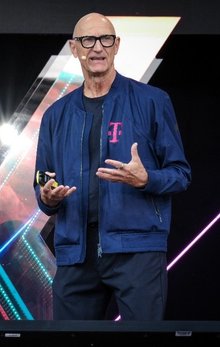
9. Deutsche Telekom
CEO: Timotheus Höttges
Founded: 1995
Location: Bonn, Germany

Deutsche Telekom has positioned itself as the guardian of European digital sovereignty.
Through its T-Systems arm, the company provides end-to-end smart city solutions that strictly adhere to GDPR and local data residency requirements.
Their "AI Factory" in Munich has been instrumental in developing traffic management models now used across various EU member states.
By championing open standards and federated cloud models, DT ensures that European cities can innovate while maintaining absolute control over their citizens’ sensitive data and infrastructure.
8. Verizon
CEO: Dan Schulman
Founded: 2000
Location: New York, US
Verizon’s leadership is defined by its massive investment in C-Band spectrum and the "One Fiber" project. This infrastructure provides the "thick" connectivity layer required for high-bandwidth applications like real-time video analytics and augmented reality navigation.
Their Multi-access Edge Computing (MEC) partnerships have made them the preferred choice for US cities implementing Vehicle-to-Everything (V2X) communications.
Verizon’s ability to process vast amounts of data at the edge makes them a vital partner for the autonomous mobility sector in 2026.
7. Telefónica
CEO: Marc Murtra
Founded: 1924
Location: Madrid, Spain

Telefónica has transformed into a technology powerhouse through its Telefónica Tech division.
They lead the market in integrating 5G with quantum-safe networking, protecting urban utility grids from future cryptographic threats.
With a strong presence in both Europe and Latin America, they have pioneered "Sovereign Cloud" solutions for municipal governments.
Their focus on big data and AI-driven mobility analytics has helped major cities like Madrid and São Paulo significantly reduce congestion and carbon emissions through more intelligent, data-led urban planning.
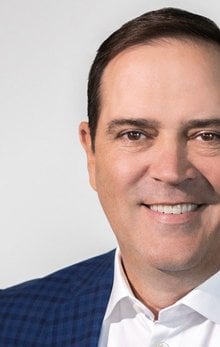
6. Cisco
CEO: Chuck Robbins
Founded: 1984
Location: San Jose, Cisco Systems
Cisco remains the industry’s "essential glue," providing the data orchestration layers that connect disparate urban systems.
Their Kinetic for Cities platform is widely recognised as the most secure architecture for managing municipal IoT.
In 2026, Cisco’s emphasis on zero-trust security has become a non-negotiable requirement for cities facing increased cyber warfare threats.
By embedding security directly into the network fabric, they allow mayors to deploy smart water, waste and energy systems with the confidence that their critical infrastructure is hardened.
5. NTT DATA
CEO: Abhijit Dubey
Founded: 1988
Location: Tokyo, Japan

NTT DATA has risen rapidly in the rankings due to its "full-stack" approach to urban transformation.
They have moved beyond traditional consultancy to become global leaders in Private 5G for municipalities.
Their work in Brownsville, Texas, has become a global case study for how private networks can bridge the digital divide while powering smart services.
By combining deep systems integration expertise with proprietary sensor technology, NTT DATA provides cities with a single point of accountability for their entire digital transformation journey.
4. Vodafone
CEO: Margherita Della Valle
Founded: 1984
Location: Newbury, Berkshire, UK
Vodafone’s massive IoT footprint across Europe and Africa gives it an unparalleled scale.
Their "Economy of Things" platform, Digital Asset Broker (DAB), allows vehicles and smart street furniture to trade and pay for services autonomously.
This innovation is driving the next phase of the urban economy, where electric vehicle charging and parking can be handled without human intervention.
Vodafone’s ability to manage over 180 million IoT connections globally makes them the primary orchestrator for vendors looking to deploy smart devices at a massive scale.
3. Huawei
CEO: Ren Zhengfei
Founded: 1987
Location: Shenzhen, China
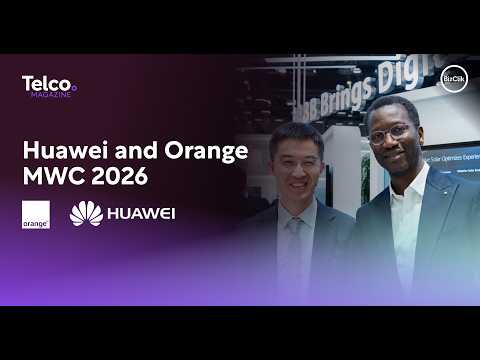
Despite regional geopolitical restrictions, Huawei is the undisputed volume leader in 5G-Advanced infrastructure.
Their deployment of "Green City" sites, which utilise solar power and AI-driven energy management, has set new standards for sustainable connectivity.
This year, their core network autonomy solutions have slashed service recovery times, ensuring that the urban nervous system is always-on.
Their ability to deliver high-performance hardware at an aggressive price point continues to make them the dominant partner for smart city projects throughout Asia, Africa and the Middle East.
2. Nokia
CEO: Justin Hotard
Founded: 1865
Location: Espoo, Finland
Nokia has successfully pivoted to become the architect of "Critical Networks" for the smart city era.
Recognising that wireless density requires a massive fiber backhaul, Nokia leads the market in high-capacity optical networking.
Their 2026 strategy focuses on "Connecting Intelligence," where the network itself becomes AI-native to handle the unpredictable traffic patterns of autonomous drones and industrial robots.
By providing the essential mission-critical infrastructure that links the edge to the core, Nokia ensures that city services, from emergency response to power distribution, benefit from ultra-reliable, low-latency connectivity that never fails.
1. Ericsson
CEO: Börje Ekholm
Founded: 1876
Location: Stockholm, Sweden

Ericsson takes the top spot in 2026, celebrating 150 years by leading the transition to agentic, programmable networks.
Their AI-native radio units are the most advanced in the industry, capable of self-optimising in real-time to manage the extreme density of modern mega-cities.
Ericsson’s "Global Network Platform" allows developers to access 5G capabilities via standardised APIs, fostering an ecosystem of smart city applications that was previously impossible.
By turning the network into a distributed, intelligent computer, Ericsson has moved from being a hardware vendor to the primary operating system for the world’s most advanced smart cities.
Company portals






Executives
Abhijit Dubey
President and Chief Executive Officer | Chief AI Officer
Börje Ekholm
President and CEO
Chuck Robbins
Chair and CEO
Dan Schulman
Chief Executive Officer
John Stankey
AT&T CEO
Justin Hotard
President and CEO
Marc Murtra Millar
Chair and CEO
Margherita Della Valle
Group Chief Executive

Ren Zhengfei
Founder and CEO
Timotheus Höttges
CEO