Beneath the oceans lies the invisible infrastructure powering the digital age: a vast web of submarine fibre-optic cables. These vital connections carry more than 99% of all intercontinental data traffic, enabling everything from real-time financial trades to cloud computing and AI applications.
Despite their critical importance, the organisations shaping and owning these deep-sea systems remain largely unrecognised outside the industry.
In recent years, the subsea cable landscape has evolved dramatically. Where telecommunications consortia once led investment and deployment, hyperscalers now dominate, driven by exponential demand for data capacity.
Alongside them are the industrial manufacturers and engineering specialists that build and deploy the multi-billion-dollar cable systems forming the internet’s physical foundation.
Mobile Magazine’s ranking highlights the 10 most influential subsea cable companies on the Forbes Global 2000 list. “Rather than focusing solely on revenue, our methodology considers direct cable investment, ownership, manufacturing scale and strategic influence on global infrastructure,” states Stella Nolan, Editor of Mobile Magazine.
The companies profiled represent a diverse group of tech giants, telcos and infrastructure leaders. Ranked from 10 to 1, the list offers a clear, strategic assessment of the players defining the future of global connectivity beneath the waves.
10 | Corning Incorporated
- Founded: 1851
- 2024 Revenue: US$13.12bn
- Global Employees: 50,000+
- Head of Network Infrastructure: Division VP and Chief Technologist, Corning Research & Development Corporation, Dr. Waguih Ishak
Corning Incorporated is a global materials science innovator with a 170-year legacy. It is known for pioneering optical fibre and plays a pivotal role in global subsea connectivity. Its high-performance fibres power transoceanic networks by enabling low-loss, high-capacity data transmission.
Technologies such as Vascade and SMF-28 are vital to modern subsea cable systems. While Corning does not own or operate cables, its fibre innovation supports hyperscalers and manufacturers alike, making it an indispensable force in building tomorrow’s digital infrastructure.
9 | Sumitomo Electric Industries, Ltd.
- Founded: 1897
- 2024 Revenue US$28.2bn
- Global Employees: 280,000+
- Head of Network Infrastructure: President & COO, Osamu Inoue
Sumitomo Electric Industries, a Japanese engineering leader, has been a cornerstone of the subsea cable industry for over a century. Supplying Japan’s first high-voltage submarine cable in 1921, the company now delivers power and fibre-optic cable systems globally.
Its energy and telecommunications division is vital to offshore wind, HVDC links and international data cables. With extensive manufacturing expertise and turnkey project capabilities, Sumitomo offers an integrated subsea infrastructure supporting energy transition and digital connectivity worldwide.
8 | Nexans S.A.
- Founded: 2000
- 2024 Revenue: US$7.7bn
- Global Employees: 28,500
- Head of Network Infrastructure: CEO, Christopher Guérin
Nexans, which has its headquarters in Paris, is a global force in subsea cable systems, powering both the energy transition and digital infrastructure. Its High Voltage & Projects division leads the design, manufacturing and installation of critical subsea interconnectors and export cables for offshore wind.
With a dedicated fleet of advanced cable-laying vessels, Nexans offers complete turnkey solutions. The company also maintains a strong foothold in subsea telecoms, delivering high-speed fibre links that connect nations and support the ongoing digital transformation.
7 | NEC Corporation
- Founded: 1899
- 2024 Revenue: US$22.3bn
- Global Employees: 105,280
- Head of Network Infrastructure: Corporate Executive VP & CTO, Motoo Nishihara
Based in Tokyo, NEC Corporation is a global technology leader with over 125 years of innovation. Its Submarine Network Division has delivered subsea telecom cable systems for more than 60 years, particularly excelling in the Asia-Pacific region.
NEC is a top-tier supplier of high-capacity systems on trans-Pacific routes, known for its engineering excellence and geopolitical trustworthiness. With more than 400,000 km of cable laid, NEC is vital in building the secure, high-speed infrastructure powering today’s global internet.
6 | Amazon
- Founded: 1994
- 2024 Revenue: US$590.7bn
- Global Employees: 1,525,000
- Head of Network Infrastructure: CEO, Amazon Web Services, Matt Garman
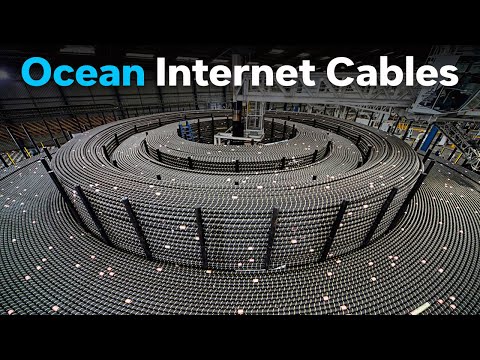
Amazon, best known for its dominance in e-commerce and cloud computing, is a growing force in the global subsea cable network. It has invested heavily in transoceanic infrastructure to support Amazon Web Services (AWS), its most profitable and strategically vital division.
As both a major capacity buyer and part-owner of key cable systems, Amazon is building the high-speed, resilient pathways essential for cloud performance. These undersea investments are central to AWS’s global reach, reliability and competitive edge in the cloud market.
5 | Nokia
- Founded: 1865
- 2024 Revenue: US$20.9bn
- Global Employees: 78,400
- Head of Network Infrastructure: President of Network Infrastructure, Federico Guillén

Nokia, a Finnish telecommunications and network technology leader, plays a key role in global subsea infrastructure through its subsidiary, Alcatel Submarine Networks (ASN). ASN is one of the world’s top end-to-end submarine cable systems providers, delivering essential connectivity for telecom operators, cloud providers and governments.
ASN’s expertise underpins much of the planet’s digital backbone, from manufacturing to maintenance. Nokia’s position in the sector highlights its strategic importance in enabling secure, high-capacity global data transmission.
4 | Microsoft
- Founded: 1975
- 2024 Revenue: US$236.5bn
- Global Employees: 221,000
- Head of Network Infrastructure: EVP & Chief Commercial Officer, Judson Althoff
Microsoft is a global technology leader known for Windows, Office and its expanding Azure cloud platform. Microsoft has become a major investor in subsea cable infrastructure to support Azure’s global reach, and services like Office 365 and Xbox.
By co-building advanced systems like the transatlantic MAREA cable, Microsoft ensures high-capacity, low-latency connections across continents. Through ownership, partnerships and adoption of open cable designs, Microsoft secures robust, scalable connectivity to power its cloud ecosystem and meet growing global data demands.
3 | Prysmian Group
- Founded: 1879
- 2022 Revenue: US$17.5bn
- Global Employees: 33,000
- Head of Network Infrastructure: EVP Transmission, Raul Gil

Prysmian Group, headquartered in Italy, is the world’s largest cable manufacturer and a leader in subsea power cable systems. Operating in more than 50 countries, it designs, produces and installs high-voltage submarine cables crucial for offshore wind and energy interconnectors.
Its Projects division leads the global market in supporting the energy transition. Backed by advanced vessels like Leonardo da Vinci, Prysmian delivers turnkey subsea solutions, vital in building the infrastructure needed for a decarbonised, interconnected global power grid.
2 | Meta Platforms
- Founded: 2004
- 2024 Revenue: US$142.7bn
- Global Employees: 67,320
- Head of Network Infrastructure: Head of Infrastructure, Santosh Janardhan
Meta Platforms is a global technology firm behind Facebook, Instagram, WhatsApp and Messenger and it serves billions of people daily. Meta’s demand for global data capacity has surged as it shifts towards artificial intelligence and the metaverse. In response, it has become a significant force in subsea cable infrastructure, co-owning systems like MAREA and 2Africa and building its own vast networks.
Through initiatives like Project Waterworth, Meta is developing a private, ultra-high-capacity global cable system to support its AI ambitions and secure resilient, low-latency connectivity across emerging markets.
1 | Alphabet (Google)
- Founded: 1998 (as Google), 2015 (as Alphabet)
- 2024 Revenue: $317.9bn
- Global Employees: 182,500
- Head of Network Infrastructure: VP of Google Global Networking, Bikash Koley
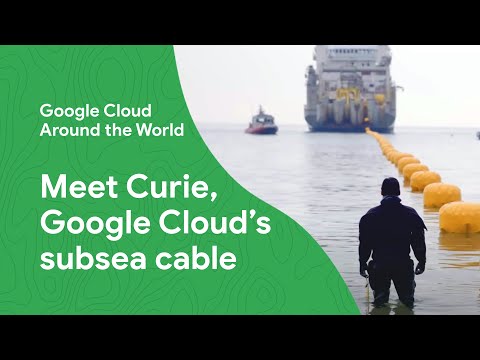
Alphabet Inc., Google’s parent company, is a global technology conglomerate at the forefront of internet infrastructure. A leader in search, cloud and AI, Google’s growing data demands have made it the pioneer in private subsea network development. Google has transformed global connectivity as the first hyperscaler to build and own intercontinental subsea cables.
With more than 100,000 km of cable and more than 30 systems, including Curie, Dunant and Grace Hopper, its private, software-defined network ensures secure, ultra-reliable performance. The strategic infrastructure underpins Google Cloud and AI services, establishing Alphabet as a dominant force in the world’s digital backbone.
Explore the latest edition of Mobile Magazine and be part of the conversation at our global conference series, Tech & AI LIVE and Cloud & 5G LIVE. Discover all our upcoming events and secure your tickets today.
Sign up to receive the Mobile Magazine weekly newsletter.
Mobile Magazine is a BizClik brand