
Asiacell and LigaData Extend AI Deployment
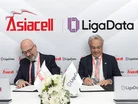
Asiacell and LigaData outline the following stages of their collaboration in Iraq as both organisations continue to develop network, commercial and operational systems based on shared data and artificial intelligence infrastructure. The partnership centres on the LigaData Data Platform, AI Fabric and an enterprise governance framework intended to align data flows and modelling methods across Asiacell.
Both companies frame the work as an effort to modernise analytics processes within a live mobile network environment, where data volumes, traffic patterns and subscriber behaviour influence core decisions.
Asiacell reports that the combined systems now support functions linked to customer experience, service planning and internal operations.
It states that consolidating processes within a single data environment supports decision-making across its network, commercial and technology units.
The governance capabilities introduced through the partnership formalise how data is prepared, stored and accessed, replacing earlier practices in which datasets were maintained separately and combined only for specific projects.
Amer Sunna, CEO of Asiacell, says, “Our partnership with LigaData continues to unlock the full value of our data and accelerate our AI transformation journey.”
Amer adds that “These initiatives mark a major step forward in our vision to build an AI-powered organisation – delivering smarter, more personalised and efficient experiences for our customers.”
AI Fabric and GPU features in telecom operations
A significant element of the partnership focuses on deploying LigaData AI Fabric within Asiacell’s network and commercial functions. Predictive models built and run on AI Fabric support churn-prevention analysis, marketing personalisation and network optimisation.
GPU-enabled features shorten model-training cycles, allowing updated versions to be implemented more rapidly in live operational environments.
For telecom teams handling subscriber-level behaviour, traffic forecasts and cell-level activity, its shortened cycle gives them access to models that reflect more recent usage patterns.
In customer-retention workflows, the models help identify subscriber activity patterns that precede churn. Marketing teams apply model outputs to adapt offers and campaigns without manual screening of large datasets.
Network teams use model forecasts to plan resource allocation in areas where usage consistently rises during specific time periods or in response to local events.
Bassel Ojjeh, CEO of LigaData, states, “Asiacell’s data-driven culture and strategic vision for AI make them one of the most forward-looking telecom operators in the region.”
Bassel notes: “Our collaboration with Asiacell has laid a powerful foundation for AI product innovation. From unified data platforms to GPU-enabled AI Fabric. All powered through our R&D centres in Silicon Valley and Dubai.
"Together, we are positioning Asiacell at the forefront of telecom intelligence.”
LigaData Data Platform migration and telecom scalability
Asiacell has completed migrating multiple legacy and functional data sources into the LigaData Data Platform. It now processes usage data, traffic information, customer records, service-activation data and campaign performance metrics within a consolidated environment.

For a telecom operator with nationwide 4G+ coverage reaching more than 99.06% of the population, the ability to process data at scale without delays is central to monitoring network load, identifying regional traffic variations and responding to service-quality indicators.
Latency reductions within the analytics environment allow Asiacell’s engineering teams to base routing and capacity decisions on up-to-date traffic patterns rather than historical aggregates. Commercial teams access the same dataset to track device behaviour, SIM activity and product adoption. As each team works from a unified environment rather than isolated systems, reporting is consistent across departments. It prevents conflicting versions of the same data from being used for planning or performance assessments.
Amer links the platform work with internal processes that influence service development and cross-functional coordination. He describes the platform as a base for processes that shape product changes, operational adjustments and ongoing automation. The approach aligns with Amer’s aim to embed data-driven practices throughout the company.
Asiacell and LigaData develop further telecom use cases
Asiacell and LigaData continue to evaluate additional use cases based on the existing deployments. Discussions focus on network investment planning, usage projections for new digital services and assessments of customer behaviour across provinces with distinct network and commercial conditions.
These use cases rely on the same consolidated datasets and modelling infrastructure, allowing teams to compare historical network loads with projected demand and adjust roll-out decisions accordingly.
The partnership further introduces additional governance processes. Asiacell applies structured controls for data access, quality checks and lineage tracking.
These controls provide clarity on how subscriber and operational data flows between systems and which internal teams access specific datasets.
The process supports lifecycle management for predictive models, ensuring that model performance is monitored as network conditions, customer behaviour and commercial priorities shift.
The work aligns with Asiacell’s role in Iraq’s telecom sector. The operator reports a subscriber base of about 20 million users and continues to rely on data-led methods to support service reliability, digital service adoption and network planning.
The collaboration with LigaData reinforces the direction as both companies extend capabilities on the systems already in operation.