
Ciena, Telstra and Neos Drive 2026 Telco Change

As 2026 approaches, the telecommunications industry stands at another inflection point.
From quantum-safe encryption to telco-trained AI and adaptive capacity models, the new year will be marked not just by technological advancement, but by a decisive move from experimentation to execution.
Quantum-safe communications move to action
Ciena’s Paulina Gomez, Senior Advisor for Product & Technology Marketing, believes 2026 will be the year when quantum-safe communications move from “awareness to action”.
“Faced with the urgent threat of ‘harvest now, decrypt later,’ crypto‑agility is no longer optional for those handling high‑value critical in‑flight data,” Paulina says.
Hybrid models combining NIST‑approved Post‑Quantum Cryptography algorithms and Quantum Key Distribution will underpin this shift.
As she explains, security‑conscious operators will drive the market through real‑world trials and deployments, ensuring network confidentiality remains resilient to future quantum threats.
The rise of telco‑trained AI and digital twins
Beyond securing communication layers, telecom operators use AI to redefine network operations.
Kailem Anderson, Vice President of Global Products & Delivery at Blue Planet – Ciena, identifies 2026 as the turning point when the spotlight shifts to telco‑specific AI models.
“In 2026, we’ll see a move to telco‑specific AI models that actually understand network structure, performance patterns, and past incidents,” Kailem says.
These domain‑aware models will power AI‑driven digital twins – real‑time simulation engines that enable operators to test actions before applying them to live environments.
The capability will accelerate progress towards multi‑domain automation, reduce risk and enable more autonomous network management.
However, as Kailem warns, autonomy introduces a new layer of exposure.
“If an attacker alters an agent’s goals or behaviour, the system could make harmful changes while believing it’s operating normally,” he says.
In 2026, therefore, securing AI systems themselves will become just as critical as securing the physical and virtual assets they control.
Capacity as a service becomes the new model
While AI changes how networks are managed, the way bandwidth is consumed is also evolving.
Wayne Lotter, Head of International Networks at Telstra International, anticipates widespread adoption of “capacity as a service” models.
“Customers will subscribe to flexible pools of capacity that can be deployed wherever needed across subsea and terrestrial routes,” Wayne explains.
This shift away from fixed capacity orders towards outcome‑based agreements will allow enterprises and hyperscalers to align bandwidth dynamically with their AI and cloud workloads.
Lotter notes that, when networks operate autonomously, flexibility and speed‑to‑market become fundamental advantages.
AI‑Driven demand reshapes UK infrastructure
In the UK, Lee Myall, CEO of Neos Networks, believes AI is triggering an infrastructure rethink.
“AI is about to reshape the UK’s connectivity landscape faster than most people realise,” Lee says.
Emerging AI and data‑centre traffic patterns are driving demand for high‑capacity, long‑haul dark fibre, prompting more disciplined, strategically targeted infrastructure builds.
Unlike the fibre boom of the early 2000s, this growth will be defined by collaboration and precision, aligning investment to genuine AI‑era hotspots.

Altnets shift from building to differentiating
According to Lee, as the UK’s alternative networks complete major fibre rollouts, 2026 will herald a new focus: innovation at the service layer.
Altnets will pivot from “digging to differentiating”, enhancing their networks through integrated security, smart managed access, and advanced home and SME propositions.
Whether through new services or partnerships, their role in supporting the UK’s digital foundation remains pivotal.
Company portals


Executives
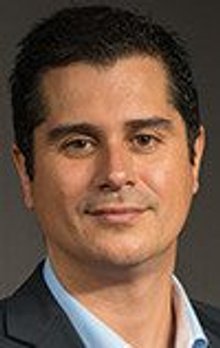
Kailem Anderson
Vice President & General Manager: Global Products & Delivery

Lee Myall
CEO

Paulina Gomez
Senior Advisor, Portfolio Marketing

Wayne Lotter
International Networks - Executive | N&IT | Telstra International