
Ericsson & SBB Deliver Europe’s First IMS VoLTE Rail Link
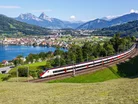
Whether you want to browse online or download digital versions of your train tickets, keeping connected on whilst on the railway is essential. However, with trains often travelling through rural spots, reliable connectivity is not always guaranteed – yet.
Switzerland’s rail network has taken a significant step toward modern, resilient communication with the first live integration of GSM R and IP Multimedia Subsystem Voice over LTE.
The collaboration between Ericsson and Swiss national rail operator SBB ensures continuity for mission critical services as Swisscom prepares to retire its 3G network by the end of 2025. The upgrade also strengthens the wider telecom landscape, offering a practical blueprint for operators managing legacy shutdowns.

Modernising rail connectivity
The 3,100km SBB network has long depended on GSM R and roaming over Swisscom’s 3G infrastructure to maintain voice coverage in areas without dedicated rail signal.
With 3G withdrawal looming, railway operators faced major operational risk. Rather than expand ageing systems, SBB commissioned Ericsson to design a forward looking solution that would connect rail specific functions with contemporary mobile and fixed telephony. The result is a converged IMS Core built to support VoLTE services at scale.
Ericsson integrated technologies from multiple vendors to create a resilient architecture that delivers continuous end to end communication.
The system now supports around 450 trains and 1,000 operational devices running on VoLTE, backed by upgraded onboard 4G equipment for approximately 1,000 trains. As a result, it enhances both reliability and availability across the national network.
Ensuring continuity during 3G shutdown
A central requirement of the programme was to avoid service disruption. Ericsson designed the IMS rollout to meet strict safety standards while ensuring full interoperability with GSM R.
Core features include IMS GSM R interworking, adapted numbering plans and essential safety functions such as emergency stop calls.
Deployment began in June 2023 followed by a structured testing process. Early 2024 saw the first VoLTE to GSM R calls completed, while pilot train testing, certified by the Federal Authority Office of Transport, took place in January 2025. By April 2025 the integrated system was operating nationwide ahead of schedule.
Nicolas Segond, Head of Mission Critical Communications for Railways in Europe, Middle East and Africa at Ericsson, says: “Our work with SBB demonstrates our capability to deliver complex digital transformations under tight timelines. We look forward to setting benchmarks in railway communication innovation and supporting the transition to FRMCS in the coming years.”
Preparing for FRMCS and next generation telecoms
The live IMS VoLTE environment provides a scalable platform that retains vital rail specific capabilities, including EIRENE functional numbering, group calling and emergency communication procedures.
With 4G and 5G compatibility, the infrastructure ensures SBB can navigate the retirement of legacy networks without compromising safety or performance.
For the telecom sector, the project illustrates how operators can future proof mission critical services while managing technology sunsets.
As Europe advances toward the Future Railway Mobile Communication System, Switzerland’s deployment showcases the role of IMS and VoLTE in bridging current systems to next generation standards.
Training for SBB’s operational teams has supported rapid adoption with migrations progressing smoothly toward final completion in December 2025.
The collaboration has already generated operational insights expected to guide similar programmes across global rail markets.
By delivering uninterrupted coverage and a path to 5G evolution, Ericsson and SBB have set a new benchmark for rail communications at a time when dependable connectivity is central to transport safety and efficiency.
Company portals

Executives
Nicolas SEGOND
Head of Railways Market - Europe & Latin America