
How China Mobile's Global Intelligence Centre Powers AI
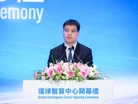
China Mobile has opened its Global Intelligence Center in Hong Kong – making it the country's largest standalone intelligent computing hub.
The ceremony gathered government officials, industry leaders and partners, and focused on how next-generation networks support computing and digital services.
Built in Fo Tan, Sha Tin, the centre operates as a high-capacity node which is designed to support both local demand and international traffic across China Mobile’s global footprint.
The launch reflects how telcos can expand beyond connectivity into integrated platforms that combine networks, cloud and AI computing.
Telco networks meet computing infrastructure
At the launch, the Chairman of China Mobile, Chen Zhongyue, set out the operator’s network-led approach to computing integration.
He said: "We will actively promote the full integration of Hong Kong’s computing power into the national network, making the city an important node in the global computing layout."
The Global Intelligence Center connects with multiple national computing hubs, forming what China Mobile describes as a pattern of "Northern Computing and Southern Connectivity, East-West Integration." This essentially means the telco company is distributing workloads across regions while maintaining low latency.
The centre combines high-performance computing with intelligent processing and multi-modal data fusion, which increases the demand for bandwidth and consistent service levels.
It links five terrestrial backbone routes between Guangdong and Hong Kong, alongside more than 100 submarine and land cables and over 440 overseas Points of Presence. Together, these assets position China Mobile's new centre as a connectivity hub that supports both regional traffic and global communications.

Hong Kong’s role in national and global connectivity
Leung Chun-ying, Vice Chairman of the National Committee of the Chinese People’s Political Consultative Conference and former CEO of HKSAR, frames the project within wider development goals.
He says: "Over the next five years, Hong Kong is expected to become a key gateway connecting the mainland with the global digital economy."
The role of the centre as a gateway depends on network density and international links. Hong Kong’s established status as a landing point for submarine cables and a base for data centres strengthens its appeal as a regional interconnection hub.
Leung also pointed to the influence of AI and big data on infrastructure demand. As the technologies expand, telcos are facing growing pressure to deliver ultra-low latency and high reliability across both fixed and mobile networks.
Michael Wong Wai-lun, Deputy Financial Secretary of the HKSAR Government, highlighted the operator’s contribution to communications infrastructure and services, stating how China Mobile already runs large-scale data centres in Tseung Kwan O and Fo Tan.
Government policy aligns with this direction, with plans to develop the Northern Metropolis and support AI through dedicated committees and investment. These initiatives mean there will be increased demand for network capacity, edge computing and cross-border connectivity for telco providers.
Expanding telecoms into AI and ecosystem services
China Mobile's Global Intelligence Center is more than a standalone facility.
It forms part of a broader move to integrate networks and industry applications. The centre supports training and inference of large-scale models, which are AI systems with hundreds of billions of parameters.
The site uses AI-driven scheduling and digital twin technology to manage operations. These tools improve efficiency and reduce energy consumption, aligning with telecoms operators’ focus on sustainable infrastructure.
The company is also building out its ecosystem through the "AI+ Overseas Ecosystem Alliance" initiative and industry-specific solutions. This aims to connect telco networks with enterprise services and enables sectors to adopt digital tools through integrated platforms.
The launch of the Global Intelligence Center shows how telcos can extend their role from connectivity to full digital service delivery. Linking infrastructure, computing and applications means the centre serves as a focal point for China Mobile’s network strategy in Hong Kong and across its international operations.
Company portals

Executives

Chen Zhongyue
Chairman