Orange, Bouygues Telecom and Free-iliad Sign MoU for SFR

For years, the French telco market has been dominated by four major operators battling for spectrum and market share.
That structure may now be heading for its biggest change in more than a decade.
Orange, Bouygues Telecom and the Free-iliad Group have signed a memorandum of understanding (MoU) with Altice France to acquire SFR, France's second-largest telco operator.
If approved, the deal would see SFR's assets divided among the three operators, reshaping the country's competitive landscape and creating larger telco groups with greater scale to invest in future networks.
The proposed transaction values SFR at €20.35bn (US$23.48bn) and is subject to consultation processes and regulatory approval. Completion could occur during the second half of 2027.

What would Orange acquire?
Of the three buyers, Orange has provided the clearest indication of the assets it expects to receive.
The operator's share of the enterprise value amounts to approximately €5.6bn (US$6.46bn) representing around 27% of the overall transaction.
Following the transaction, Orange would acquire around four million mobile customers and one million fixed broadband customers.
Those additions would increase its mobile customer base in France by approximately 18% and its broadband customer base by around 8%.
The package includes a portion of SFR-branded customers as well as all customers from the Coriolis, Syma and Réglo brands.
Orange would also acquire 47MHz of spectrum, equivalent to around 31% of SFR's spectrum portfolio. The additional frequencies would increase Orange's total spectrum holdings to 221MHz, reinforcing its position as France's largest spectrum holder and supporting future 5G deployments.
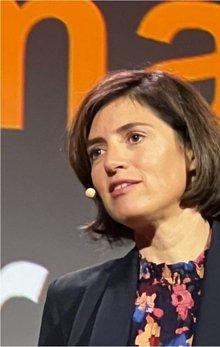
Christel Heydemann, CEO of Orange, explained how the announcement "marks a decisive step in our most important market."
She expanded: "This agreement is set to reinforce Orange's leadership position in France and in Europe and will support the ambitions of our Trust the future plan.
"In an accelerating digital world, France needs operators capable of investing massively and sustainably in infrastructure and digital services.
"For all customers who will join Orange, this means the promise of access to the best networks, best-in-class customer service and innovative digital services designed to meet their everyday needs.
"This is an ambitious industrial project that we will carry out together with all our teams in France."
Bouygues Telecom's role in the deal
Bouygues Telecom is set to receive the largest share of SFR's assets, accounting for around 42% of the transaction value.
Under the proposed structure, Bouygues Telecom would acquire SFR's business division and customer base, along with 5.9 million SFR consumer customers and the Prixtel mobile virtual network operator, which serves around 500,000 customers.
The operator would also take ownership of several infrastructure assets, including SFR's mobile network in less densely populated areas under the Crozon network-sharing arrangement.
It would also include dedicated fixed infrastructure serving business customers and SFR's stake in the Faber fibre network in parts of France's very dense urban areas.
Based on 2025 figures for the assets under consideration, Bouygues Telecom's share of the transaction would represent around 52% of the revenue generated by the acquired businesses and 42% of EBITDAaL.
Free-iliad's share of the MoU
Free-iliad's share centres on SFR's value-focused consumer operations.
The subsidiary of Iliad Group would acquire the entire RED by SFR customer base, comprising approximately six million subscribers, alongside 1.6 million SFR consumer customers.
This would also include around 400,000 small business customers operating under the SFR brand.
The assets allocated to Free-iliad would account for approximately 31% of the transaction value. Based on 2025 financial figures, they would represent around 27% of the acquired revenue and 33% of EBITDAaL.
In addition to the customer base, Free-iliad would receive a share of SFR's spectrum portfolio, with frequencies divided between all three members of the consortium following completion of the transaction.
Why split SFR?
The transaction is not simply about customer growth.
The three operators argue that a more consolidated market would strengthen the sector's ability to invest in infrastructure and innovation.
By distributing SFR's assets across Orange, Bouygues Telecom and Free-iliad, the consortium aims to create larger operators with greater financial capacity to fund network expansion and service development.
The deal would also preserve competition between three major national operators while eliminating the need for SFR to continue operating as a standalone business.
A significant part of the value for Orange is expected to come from moving acquired customers onto its existing infrastructure.
The company estimates annual cost synergies exceeding €500m (US$577m) once integration is complete, with around 60% of those savings generated through network and infrastructure optimisation.
A complex integration challenge
While the strategic logic may be straightforward, the execution will be anything but.
The consortium describes the migration of millions of subscribers, systems and network assets as a multi-year industrial programme. Service continuity will depend heavily on existing SFR employees, whose expertise will be needed throughout the transition.
To address those concerns, the buyers have committed to maintaining employment for staff within the acquired scope until the beginning of 2029, either through their current positions or alternative job opportunities.
The next step is consultation with employee representative bodies, followed by reviews from competition and regulatory authorities.
Only once those approvals have been secured can the process of dividing SFR's customers, spectrum and infrastructure between Orange, Bouygues Telecom and Free-iliad begin.
Company portals



Executives

Benoît Torloting
CEO
Christel Heydemann
Chief Executive Officer
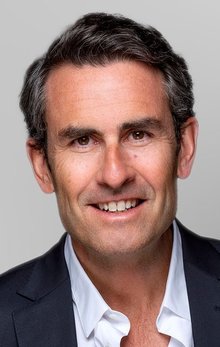
Thomas Reynaud
Director General