
Samsung to Double Galaxy AI Reach by End of 2025

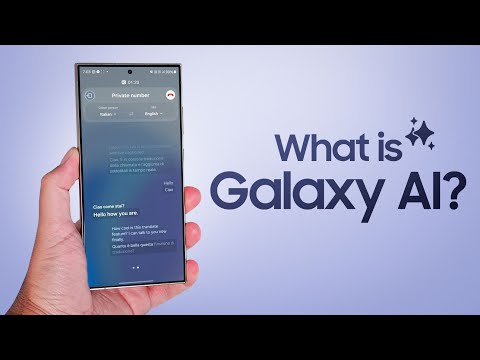
Samsung has unveiled plans to expand its Galaxy AI platform to more than 400 million handheld devices by the end of 2025, doubling its reach from the previous year. The announcement, made at its recent Galaxy Unpacked event, signals a significant step in Samsung’s strategy to redefine mobile interaction through artificial intelligence.
With Galaxy AI already rolled out to more than 200 million devices in 2024—beginning with the Galaxy S24 series—Samsung is moving decisively to embed AI deeper into the mobile user experience.
The initiative is informed by rising user engagement, particularly with Google Gemini, the result of a strategic collaboration between Samsung and Google.
“Through close collaboration with Samsung, Gemini works seamlessly across its devices and connects with its first-party apps to provide helpful and personalised responses,” says Mindy Brooks, VP of Android Consumer Product & Experience at Google.
“For example, Gemini’s live video capabilities have been optimised for the Flip’s front screen camera and Gemini on Galaxy Watch leverages context from your phone.”
AI adoption on the rise
Samsung reports that more than 70% of Galaxy S25 users actively engage with Galaxy AI tools. Among the most widely used is Google Gemini, whose integration with Samsung’s native applications has resulted in a threefold increase in usage across Galaxy S series devices.
The data reflects a growing trend: mobile users now expect AI-driven personalisation as part of the standard smartphone experience.
A joint study by Samsung and Symmetry Research illustrates the behavioural shift. The findings reveal that 47% of consumers say their daily routines would be disrupted without AI tools such as intelligent notifications, contextual search and voice assistants.
Moreover, 45% now use voice commands as frequently as typed input, indicating a substantial change in user interaction preferences.
Positioning in a competitive AI market
Samsung’s AI strategy places it in a strong position within the increasingly competitive mobile AI landscape. As AI becomes the primary differentiator in smartphones—outpacing hardware specifications—the move to scale Galaxy AI across device tiers reflects a push to gain share across multiple market segments.
Features such as Circle to Search, Note Assist and Photo Assist are central to Samsung’s value proposition.
The tools not only enhance productivity and usability but serve to increase user loyalty and time spent within the Galaxy ecosystem. The inclusion in mid-range devices marks a shift towards democratising AI access, not just reserving it for flagship models.
“Some see AI as the start of a ‘post smartphone’ era, but we see it differently,” explains Jisun Park, Corporate Executive Vice President & Head of Language AI Team at Samsung.
“We’re building a future where your devices don’t just respond; they become smarter to anticipate, see and work quietly in the background to make life feel a little more effortless.”
Privacy, performance and device integration
A key component of Samsung’s AI roadmap is its commitment to on-device processing. The approach mitigates concerns around data privacy while ensuring responsive performance across AI-powered features. By keeping processing local to the device, Samsung addresses a growing consumer expectation for privacy-conscious design without compromising on user experience.
AI capabilities have been tailored for specific form factors. For example, the Galaxy Watch leverages phone context for predictive responses, while the Galaxy Flip benefits from optimised AI functionality using its front-facing screen. The device-aware design reinforces Samsung’s strength in hardware-software integration.
Implications for the wider telecom sector
Samsung’s expansion of Galaxy AI could have far-reaching implications across the telecommunications and mobile technology sectors. The scale and speed of deployment may set a new benchmark for AI adoption, challenging competitors to accelerate their own AI initiatives or risk falling behind in user engagement and market relevance.
Rather than viewing AI as a replacement for smartphones, Samsung sees it as a foundational layer that enhances the role of mobile devices as the central hub of digital life. By embedding intelligence directly into its hardware ecosystem, Samsung is influencing how AI is perceived and delivered at scale, potentially reshaping the trajectory of the mobile industry.
In a market where user expectations and technological capabilities evolve rapidly, Samsung’s forward-looking strategy marks a defining moment in the convergence of telecoms, AI and user experience design.