Inside Volkswagen’s Private Cloud Build with T-Systems

Volkswagen is rethinking where its data lives, how it is processed and who controls the infrastructure beneath it.
The car manufacturer has selected T-Systems, Deutsche Telekom’s IT services arm, to build and operate its new Group Private Cloud globally, marking a significant vote of confidence in European cloud infrastructure and digital sovereignty.
The project will see T-Systems establish and manage Volkswagen’s Group Private Cloud 2.0, which is designed to become a key platform for applications across the automotive giant’s portfolio of brands.
New IT applications are already being hosted on the platform, with existing systems expected to migrate over time.
As enterprises reassess where and how critical workloads are hosted, telco-backed cloud platforms are positioning themselves as alternatives to traditional public cloud providers.
A cloud strategy focused on control
Volkswagen says the new environment will complement its existing internal IT landscape while strengthening its ability to process and manage data within a European legal framework.
The move forms part of a wider effort to increase operational independence and resilience at a time when data sovereignty and cybersecurity concerns are climbing higher on enterprise agendas.
“We are strengthening our digital resilience with a smart combination of technology partnerships, European initiatives and our own robust infrastructure,” says Hauke Stars, Volkswagen Group Board Member for IT.
“With our Group Private Cloud, we will process more data ourselves in the future, making us more economically independent.
“With T-Systems, we have a strong partner at our side who will operate this cloud solution at our locations.”
Telcos target the sovereignty opportunity
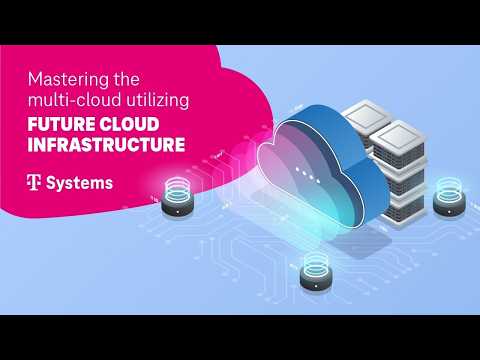
The Volkswagen contract is a showcase for T Cloud Private, the company’s private cloud platform.
Unlike public cloud environments, the offering gives customers direct control over infrastructure, data locations and security policies while retaining cloud-native benefits such as scalability and efficient processing.
T-Systems argues that the model can satisfy strict regulatory requirements while helping organisations protect sensitive data and business-critical applications.
“Sovereignty doesn’t have to be expensive,” emphasises Ferri Abolhassan, CEO of T-Systems and a member of the Deutsche Telekom Board of Management.
“With our T Cloud Private, we combine lower costs with greater independence and enhanced security.
“This even allows us to undercut the prices of many public cloud offerings from hyperscalers.
“In addition, our T Cloud Private provides the Volkswagen Group with easy access to our AI infrastructure in Munich.
“Our Industrial AI Cloud offers a wide range of application possibilities for the VW Group.”
That reference to AI infrastructure points to another area where telco operators are seeking growth.
As enterprises invest in AI workloads, demand is increasing for localised computing resources that meet performance and security requirements.
Operating Volkswagen’s private cloud therefore positions T-Systems at the heart of a long-term digital transformation programme that combines cloud infrastructure and AI capabilities under a single regulated, managed environment.
Company portals
Executives
Ferri Abolhassan
CEO T-Systems, Board Member of Deutsche Telekom AG

Hauke Stars
Group Board Member for IT