Connectivity Boost: Vodafone Builds Subsea Cable in Greece

Vodafone’s Carrier Services unit has begun work on a new 340km subsea optical fibre cable system to connect Heraklion in Crete with Athens on the mainland.
Named the Thetis Express, the cable aims to strengthen connectivity across Greece, enhance digital infrastructure and provide more wholesale capacity and resilience to other telecoms providers.
Greece gains new role in international data transit
The project includes three new high-speed terrestrial cable routes which, together with the subsea system, help position Greece as a digital gateway linking Europe with Africa and Asia.
The subsea section alone includes two marine segments, measuring 129 and 163km respectively, with land connections across Milos and termination points in Heraklion and Attika.
Once operational, the Thetis Express will transmit up to 180Tbps. That capacity is equal to around 25 million people streaming 4K video at once.
It also connects carrier-neutral data centres in both Crete and Athens, enabling direct interconnection options for third-party operators and enterprises.
The infrastructure supports Vodafone’s wider strategy of expanding digital infrastructure in Southern Europe and building a more resilient, higher-capacity wholesale network.

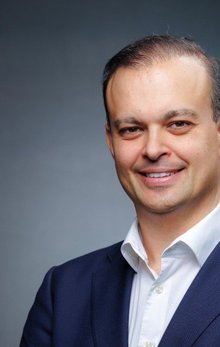
Fánan Henriques, Product and International Business Director at Vodafone Business, says: “Vodafone plays a central role in ensuring Internet traffic flows smoothly and securely worldwide.
“We are now extending this capability to more places in Greece using a mix of new optical fibre terrestrial and subsea cables and in the future, emerging satellite services like space-based direct-to-device mobile broadband.”
Wholesale gains and improved network resilience
Vodafone’s wholesale division expects the Thetis Express and its associated land systems to improve traffic routing options across Greece and into other European and Asian markets. The new infrastructure allows faster and more resilient service delivery for other telecoms operators and internet service providers (ISPs).
These providers gain the ability to reroute traffic during outages or faults, minimising downtime and improving service continuity.
That resilience is especially valuable for wholesale customers serving businesses, public services and mobile operators.
End-users also benefit from reduced latency and faster access to services such as cloud computing, video conferencing, digital banking and telehealth.
By connecting two major data centre hubs, the system enables more efficient regional peering and content delivery.
The design of the system supports both local and international needs. Alongside boosting speeds within Greece, it enhances global routing through the Eastern Mediterranean, helping shift more international data through the country’s fibre infrastructure.
Integrated with wider subsea cable networks
Vodafone confirms that the Thetis Express is intended to connect with the 2Africa cable network, which already lands at its station in Crete.
2Africa is one of the world’s largest subsea cable projects, with links across 33 countries in Africa, Europe and Asia.
The connection would allow Vodafone and other providers to move data more efficiently between continents, using Greece as a landing point.
This could support demand growth from data centres, cloud providers and operators with international customer bases.
Vodafone Greece already runs a wide subsea and terrestrial fibre footprint in the region. These links include routes between Attica and the Cyclades (Syros, Tinos, Mykonos, Naxos, Paros and Santorini), the Dodecanese (Kos and Rhodes) and Crete. The network also includes a connection from Corfu to mainland Greece.
Combined with the new system, this infrastructure expands Vodafone’s capacity to offer high-speed, high-resilience wholesale connectivity.
The Thetis Express helps secure Greece’s position as a strategic point in Europe’s digital infrastructure, offering faster data paths and reliable services for wholesale, retail and enterprise customers alike.
Company portals

Executives
Fánan Henriques
Product and International Business Director