AWS Fastnet Subsea Cable to Connect US and Ireland in 2028
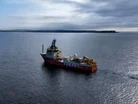
Amazon Web Services has announced plans for Fastnet, a transatlantic subsea fibre optic cable system that will connect Maryland in the United States with County Cork in Ireland.
The cable system, scheduled to become operational in 2028, will add to AWS’s existing global network, which currently spans 38 geographic regions and 120 availability zones connected by over nine million kilometres of terrestrial and subsea fibre optic cabling: a distance equivalent to reaching from Earth to the Moon and back more than 11 times.
Fastnet will deliver capacity exceeding 320 terabits per second: capable of transmitting the entire digitised Library of Congress three times every second or streaming 12.5 million high-definition films simultaneously. The system will integrate directly into AWS’s global network infrastructure, providing customers with access to cloud computing and AI services across the Atlantic.
“Amazon’s new Fastnet transatlantic subsea cable represents a vote of confidence in Ireland's digital future, helping to enable the next wave of innovation in cloud computing and AI,” says Micheál Martin, Taoiseach. “By linking County Cork to Maryland in the United States, Ireland will become a true gateway to Europe for submarine telecommunications cables.”
Fastnet cable system targets network resilience with diverse routing
The cable system has been designed with two strategic landing points that deliver route diversity away from traditional cable corridors. Many existing transatlantic cables land in concentrated geographic areas, creating vulnerabilities when cables encounter disruptions. The Fastnet landing points in Maryland and County Cork provide alternative pathways for data traffic.
The system incorporates optical switching branching unit technology, positioned on the cable route to enable redirection of data to future landing points as network demands evolve. This architecture has been designed to handle growing AI traffic loads, which require substantial bandwidth for training large language models and processing machine learning workloads.

The system will feature automated network management tools that continuously monitor network health and automatically resolve 96% of network events without human intervention. The AWS centralised traffic monitoring system has complete visibility into every link within the global network, implementing millions of daily optimisations to ensure customer traffic uses the most available path.
Maryland secures first subsea cable landing with AWS Fastnet
The Fastnet project represents Maryland’s first subsea fibre cable landing. Previous transatlantic cables to the United States have typically landed in states such as New York, New Jersey and Virginia.
“Building Maryland's first-ever subsea fibre cable is an achievement bigger than broadband connectivity,” says Wes Moore, Governor of Maryland. “It’s about securing Maryland’s status as a global hub for innovation, job creation and high-tech investment.
“To grow our economy, we need to prioritise industries of the future. That is exactly what this project helps us deliver, in partnership with leaders with deep local ties and robust commitment to community engagement.”
AWS is establishing Community Benefit Funds for Maryland’s Eastern Shore and County Cork. These funds could support initiatives including STEM education, workforce development, economic development programmes and environmental sustainability projects.
Cloud providers invest in dedicated subsea infrastructure capacity
Since 2006, AWS has invested in building cloud infrastructure across multiple continents. The company has expanded from a single region to 38 geographic regions, with announced plans for three more regions and 10 additional availability zones.
The Fastnet cable system will provide customers with capacity for operations ranging from generative AI applications to transatlantic business connectivity. Gen AI applications, including large language models, require substantial bandwidth for training and inference workloads that transfer data across geographic regions.
Cloud providers have increasingly invested in their own subsea cable infrastructure in recent years, moving beyond reliance on cables owned by telecommunications carriers. Google, Meta and Microsoft have all participated in subsea cable projects. Hyperscale cloud providers now generate sufficient traffic volumes to justify dedicated cable capacity, rather than purchasing bandwidth from traditional telecommunications operators.
Micheál says the project will strengthen Ireland's position in the global digital economy. “This investment will enhance our global connectivity, reinforce the resilience of critical digital infrastructure, and strengthen our economic competitiveness,” he says.