Nokia and Google Cloud’s AI Agent Collaboration
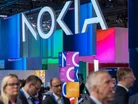
As part of an expanded partnership with Google Cloud, Nokia is integrating six specialised AI agents built with Google Gemini into its network software suite.
By doing so, Nokia is enhancing its ability to help telecoms operators cut operational costs, quickly fix network issues and increase network automation.
Nokia claims that agents can cut network problem-solving times by 50 to 80% and significantly reduce service downtime. It adds that complex issues that would otherwise have taken hours to isolate, such as voice degradation or software errors, can now be flagged and resolved in minutes.
Other benefits include being able to use simple language to quickly create dashboards and performance reports.

Many agents make light work
Each of the six agents has been designed to carry out specific operational tasks independently or work together to solve more complex issues. They are:
- Action reasoner agent: Matches active events against automation catalogues to recommend specific remediation steps.
- Anomaly reasoner agent: Investigates unusual network behaviour to determine if an issue is a genuine one or just a false alarm.
- Event triage agent: Analyses alarms and compares them against historical patterns to identify root causes and assess their impact.
- Dashboard agent: Enables teams to quickly generate visual analytics and tracking screens using natural language prompts.
- KPI selector agent: Provides domain-expert interpretation of complex network performance metrics, definitions, and measurement units to aid reasoning.
- Router agent: Acts as the central orchestration layer by interpreting user intent and managing communication between other agents while ensuring compliance with operational guardrails.
The router and event agents are ready for use. Nokia’s platform will launch as a SaaS model on the Google Cloud Marketplace in September 2026. When that happens, operators will be able to deploy this starter pack of certified agents to work with the Nokia Assurance Center – the vendor’s network software suite. Nokia will deliver the remaining agents via rolling software updates.
Ensuring human oversight remains
The agents retain a human-in-the-loop. The action reasoner agent presents confidence-based recommendations to human agents, who retain final approval over critical control points, before fixes are automatically executed and logged. Closed-loop automation is also supported for low-risk policy-approved scenarios.
Nokia created the agents using Google Cloud’s Agent Development Kit on the Gemini Enterprise Agent Platform. The multi-agent framework runs on standard Google Cloud compute and storage.
"The AI era demands a new kind of network – one that is programmable, AI-native and able to operate at machine speed," says Vivek Jaiswal, Senior Vice President of Autonomous Networks at Nokia. "With Gemini-powered agents integrated into Nokia's automation portfolio, we're helping telecom providers move beyond manual operations to maximise performance, ensure reliability and find new efficiencies within their data."
"Agentic AI marks a fundamental shift in how telecommunications networks are managed, moving operators away from rigid templates to dynamic, goal-oriented automation," adds Sridhar Gollapudi, Global Telco Market Lead at Google Cloud. "By applying Gemini's multimodal reasoning capabilities to complex data streams, this partnership helps operators to transition from manual workflows to a self-driving posture that lowers costs and optimises resources globally."
AT&T’s use of Google Cloud for AI training
US operator AT&T has also been working with Google Cloud on AI for telecoms. As part of the GSMA’s collaborative Open Telco platform, AT&T post-trained a family of open telco models, called OTel on different architectures. These include Google’s open-source Gemma models.
The models were trained on a telco-specific dataset curated by the GSMA and its collaborators. They use retrieval augmented generation (RAG) to drastically reduce hallucinations.
AT&T’s tests found that the gemma-4-E4B-it model achieved the highest overall accuracy for all models, returning the correct response 91.74% of the time.
"Gemma models have increasingly been setting the standard for open-source fine-tuning," says Mark Austin, VP of data science and AI at AT&T. "By training these models specifically on telco data, we'll be able to outperform legacy models several times its size in certain telco scenarios. This can help increase accuracy while driving down costs at the same time."
Company portals

Executives
Sridhar Gollapudi
Head Of Telco Industry Solutions, Google Cloud
Vivek Jaiswal
SVP of SW Engineering