Deutsche Telekom & Nvidia's European AI Data Centre

Deutsche Telekom and Nvidia are set to develop a €1bn (US$1.16bn) data centre in Munich, a move that signals a strategic direction for European telecommunications companies in the developing AI sector.
This joint plan is designed to advance Europe's AI infrastructure, providing businesses with the computational power needed to build and use AI models.
The project addresses concerns from policymakers and industry leaders about Europe's limited access to AI computing capacity compared to the United States and China.
The new facility aims to address this gap. According to a Bloomberg report, software corporation SAP is confirmed as one of the first major customers, indicating a focus on accelerating the enterprise adoption of large-scale AI within Europe.
Telcos and European AI infrastructure
This partnership aligns with a wider movement across European governments to increase investment in AI infrastructure and achieve digital sovereignty.
The European Union has committed €200bn (US$216bn) over the next decade to enhance its AI computing resources.
The EU Commission's long-term goal includes tripling its computing capacity within seven years, which could be supported by industrial collaborations between local telecom operators, technology firms and software companies.
The Nvidia-Deutsche Telekom initiative is one component of this strategy.
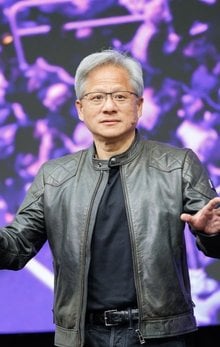
Speaking on the need for collaboration, Nvidia’s CEO, Jensen Huang, says: “We believe that to compete, to build a meaningful ecosystem, Europe needs to come together and build capacity that is joint.”
The data centre will house approximately 10,000 Nvidia GPUs, illustrating the project's scale while also highlighting the resource gap between Europe and global leaders, where some US-based projects involve hundreds of thousands of GPUs.
Germany’s role in the AI expansion
The choice of Munich for the data centre reflects Germany's central position in Europe's technology sector.
The country is already home to several major cloud and data infrastructure projects, many of which are part of the European Commission’s Gaia-X initiative.
The new facility will be powered by Nvidia’s accelerated computing architecture, which is engineered for generative AI training, inference applications and complex simulation workloads.
The project also involves major public-private coordination.
Karsten Wildberger, Germany’s Digital Minister, is anticipated to join Huang, Deutsche Telekom CEO Tim Höttges and SAP CEO Christian Klein at the official announcement.
This gathering of leaders highlights the coordinated support for scaling AI infrastructure within national borders.
Klein says : “The topics around AI are now emerging towards how can SAP help me solve the tough, challenging business questions I have, and how I can steer my company better, and how to orchestrate my end-to-end business processes with SAP Business AI. That’s what is really at the top of the agenda of every C-level discussion.”
A move towards local AI ecosystems
The push for a European-led AI ecosystem stems from a policy focus on digital resilience.
Companies and institutions on the continent are looking for ways to innovate while maintaining control over how and where their data is processed.
This initiative demonstrates one such approach by investing in domestically operated infrastructure to serve European industries in alignment with data governance frameworks.
Tim Höttges, CEO of Deutsche Telekom AG, explained the urgency of the situation.
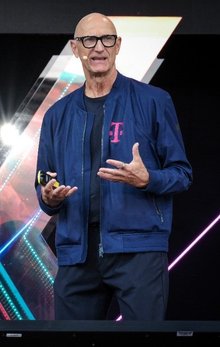
“Europe’s technological future needs a sprint, not a stroll,” says Tim.

He adds: “We must seize the opportunities of artificial intelligence now, transform our industry and secure a leading position in the global technology competition. Our economic success depends on quick decisions and collaborative innovations.”
The Munich facility could serve as a model for modular expansion in other regions. It will combine Nvidia’s hardware supply and cloud orchestration with Deutsche Telekom’s networking and connectivity services.
This partnership may act as a template for other telcos, showing a path from being connectivity providers to becoming central figures in the AI infrastructure landscape.
Discussing the partnership, Jensen said: ”By building Europe’s first industrial AI infrastructure, we’re enabling the region’s leading industrial companies to advance simulation-first, AI-powered manufacturing.”
Company portals



Executives
Christian Klein
CEO & Member of the Executive Board
Jensen Huang
Founder and CEO
Tim Höttges
CEO