
Orange Marine Renews Fleet to Support Telecom Networks
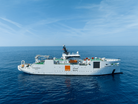
Orange Marine, part of the Orange Group and specialising in submarine cable operations, is expanding its capabilities to support the telecommunications sector across Europe, Africa and the Middle East. It has confirmed the construction of two new cable ships designed to reinforce the maintenance and durability of subsea network infrastructure, which is essential to global data connectivity.
The initiative forms part of Orange’s broader strategy to secure the critical assets that support international communications. Once operational, the new vessels will contribute to maintaining the stability of the Internet and data services that move across undersea cables connecting multiple regional hubs.
Michaël Trabbia, CEO of Orange Wholesale, says the move aligns with the group’s investment priorities. “As a leader in global digital infrastructure, Orange manages over 450,000 km of undersea cables connecting all continents.
"This strategic investment in our fleet of cable ships will be a key to ensuring the resilience and security of the global Internet. It demonstrates our confidence in Orange Marine’s prospects and the expertise of its teams,” he says.
Colombo Dockyard to deliver orange marine vessels by 2029
The two new sister ships are scheduled for delivery in 2028 and 2029 by Colombo Dockyard in Sri Lanka, which previously built the cable ship Sophie Germain in 2023.
They will replace the Léon Thévenin, commissioned in 1983, based in South Africa and the Antonio Meucci, launched in 1987, based in Italy. Both have played roles in maintaining cables across the Atlantic, Indian Ocean, Mediterranean, Black Sea and Red Sea.
Construction at Colombo Dockyard extends an existing partnership that integrates Orange Marine’s operational specifications with the dockyard’s shipbuilding expertise.
The agreement enables Orange Marine to modernise its technical resources in line with the evolving operational needs of the global telecoms ecosystem.

The new vessels will primarily focus on cable repair and maintenance, although they will be equipped to lay submarine segments of up to 1,000 kilometres.
The work supports the increasing data demand driven by cloud computing, hyperscale data exchange and international Internet backbone expansion.
Each ship will feature systems for precise navigation and mission management designed to support 24/7 operations in remote zones. It is particularly relevant to operators, OTT service providers and consortia responsible for multi-terabit subsea networks linking Europe, Africa and Asia.
Energy-optimised fleet supports sustainability targets
The modernisation programme introduces vessel designs that reduce energy usage across maintenance operations.
Orange Marine reports that the hull shape alone can cut fuel consumption by around 25 per cent during cable repair activities. Both ships will use a hybrid diesel-electric propulsion model supported by energy storage through onboard batteries.
Electricity production will be managed dynamically, with the option to connect to onshore power supplies when in port, thereby reducing emissions.
Each ship will integrate Azipod main thrusters, enhancing manoeuvrability and reliability for precision positioning during subsea operations.
By design, the features collectively reduce CO₂ intensity by approximately 20% compared to older vessels.
The efficiency gains contribute to Orange Group’s ongoing corporate environmental targets and align with sustainability benchmarks that are increasingly necessary across the telecommunications industry’s supply chain.
Both ships will carry remotely operated vehicles (ROVs) for subsea intervention. These ROVs, designed and manufactured by Orange Marine, perform inspection, cutting and burial tasks during fault isolation or maintenance operations on active cables.
For telecom operators and backbone providers, the use of in-house ROV technology is central to minimising service disruption and response times when repairing critical intercontinental routes.
Orange Marine and Elettra TLC extend telecom network support
The two new cable ships will expand the Orange Marine and Elettra TLC fleet, which currently includes six operational vessels serving the global subsea market.
Combined, they provide installation, survey and maintenance services for subsea systems that carry the majority of voice, data and financial traffic between continents.
By design, the features collectively reduce CO₂ intensity by approximately 20% compared to older vessels.
The efficiency gains contribute to Orange Group’s ongoing corporate environmental targets and align with sustainability benchmarks that are increasingly necessary across the telecommunications industry’s supply chain.
Both ships will carry remotely operated vehicles (ROVs) for subsea intervention. These ROVs, designed and manufactured by Orange Marine, perform inspection, cutting and burial tasks during fault isolation or maintenance operations on active cables.
For telecom operators and backbone providers, the use of in-house ROV technology is central to minimising service disruption and response times when repairing critical intercontinental routes.
Orange Marine and Elettra TLC extend telecom network support
The two new cable ships will expand the Orange Marine and Elettra TLC fleet, which currently includes six operational vessels serving the global subsea market.
Combined, they provide installation, survey and maintenance services for subsea systems that carry the majority of voice, data and financial traffic between continents.
Didier Dillard, President of Orange Marine and Elettra TLC, states that the renewal of the cable ship fleet directly supports network operators and service providers that rely on continuous infrastructure maintenance.
“The ageing of the cable ship fleet is a major concern for all players in the submarine cable industry. Building these new ships will enable Orange Marine and Elettra to have the most modern fleet in the world, serving all our clients globally, with an optimised environmental footprint,” he says.
The investment strengthens Orange Marine’s position within the telecoms value chain, ensuring that cable maintenance operations remain responsive to network operators’ uptime requirements and service-level expectations.