Google, Microsoft and Nvidia's AI Weather Prediction
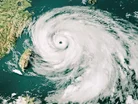
The increasing frequency of extreme weather events is presenting major operational challenges for the telecommunications sector.
The integrity of network infrastructure from cell towers to fibre-optic cables is under threat from climate-related disasters.
This requires a more advanced approach to weather prediction to ensure service continuity and protect vital assets.
As climate change continues to introduce unpredictability, accurate and timely forecasting is becoming essential for network resilience and disaster management.
According to the World Meteorological Organization (WMO), extreme weather, climate and water-related events caused nearly 12,000 disasters between 1970 and 2021 with reported economic losses reaching US$4.3tn.
While early warning systems have helped to reduce fatalities, the economic impact has grown substantially. For the telecommunications industry, this translates into a direct risk to infrastructure and a subsequent impact on revenue and customer trust.
AI forecasting and network resilience
Artificial intelligence could offer a solution by improving the speed, accuracy and resolution of weather forecasts at a lower cost than traditional methods.
Nowcasting, which focuses on the immediate hours ahead, is particularly valuable. It uses real-time data from sources like weather radars and satellites to predict sudden high-impact phenomena, enabling telcos to prepare for potential outages and deploy maintenance crews more effectively.
Public and private organisations are collaborating on these new technologies. The WMO Integrated Processing and Prediction System (WIPPS) is implementing the AI for Nowcasting Pilot Project (AINPP), bringing together experts from national meteorological services, universities and major tech companies, including Google, Microsoft and Nvidia.

- Google - WeatherNext
- Microsoft - Aurora
- Nvidia - Earth-2
- IBM - Environmental Intelligence Suite
- Amazon - AWS
- Huawei - Pangu-Weather
- Alibaba Group - DAMO Academy’s “Baguan” model
- Fujitsu - supplies supercomputer for Japan Meteorological Agency
- Atos - BullSequana
- HPE - Cray EX systems
One notable tool, Aardvark Weather, created by University of Cambridge researchers, learns directly from data.
The University says that when using just 10% of the input data of existing systems, Aardvark already outperforms the United States national GFS forecasting system on many variables.
The role of big tech in predictive models
Major technology firms are developing their own AI-powered weather platforms. Google's WeatherNext is a family of AI models from Google DeepMind and Google Research that Google claims are faster and more efficient than traditional physics-based models.
These tools are being made available to enterprise customers to help them prepare for extreme weather.
"WeatherNext will change how businesses use AI for business-critical operations affected by weather, including better planning for retail inventory, logistics disruptions, manufacturing production needs, distribution line maintenance and many other uses," explains Carrie Tharp, VP, Global Solutions & Industries at Google Cloud.
Carrie adds that by providing this advanced technology, customers can make more informed decisions and ensure stronger business continuity.
"Opening WeatherNext to enterprises expands its applications from the research lab to the real world," says Pete Battaglia, Director of Research for Sustainability at Google DeepMind. "It enables companies to proactively prepare for extreme weather and better serve their communities."
Microsoft's contribution is Aurora, a foundation model designed to forecast a wide range of environmental events at a lower computational cost.
As a foundation model with more than a billion parameters, it can be specialised for various tasks beyond general weather forecasting, such as predicting air pollution or tropical cyclones, even in areas with sparse data.
“We’re not putting in strict rules about how we think variables should interact with each other,” says Megan Stanley, a Senior Researcher at Microsoft Research AI for Science.
She adds: “We’re just giving a large deep-learning model the option to learn whatever is most useful. This is the power of deep learning in these kinds of simulation problems.”
Enhancing operational efficiency
Nvidia’s Earth-2 platform provides tools for building AI-accelerated digital twins of weather and climate patterns. Its microservices include FourCastNet, an AI model for medium-range forecasts and CorrDiff, a generative model that refines coarse global data into kilometre-scale guidance.
Nvidia states that CorrDiff is up to 1,000 times faster and 3,000 times more energy efficient than traditional high-resolution methods.
For predicting localised events critical for protecting specific infrastructure sites, StormCast, a generative AI model, can emulate atmospheric dynamics at a mesoscale.
Company portals










Executives
Carrie Tharp
VP Global Solutions & Industries - Google Cloud
Peter Battaglia
Senior Director