Telco sector tracks IBM, Google and Meta AI data growth

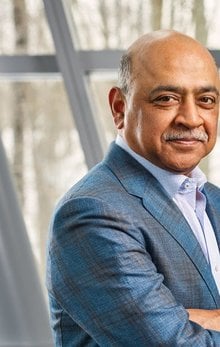
On the Decoder podcast with host Nilay Patel, IBM CEO Arvind Krishna discusses the scale and economics of expanding compute infrastructure needed for artificial intelligence.
Arvind says: “There’s no way you’re going to get a return on that in my view because eight trillion of capex means you need roughly 800 billion of profit just to pay for the interest.”
He bases his calculation on a current rate of US$80bn to fill a 1 gigawatt data centre.
“So if you’re going to commit 20 to 30 gigawatts, that’s one company, that’s 1.5 trillion of capex,” he explains. He further notes the depreciation cycle for AI chips within data facilities: “You’ve got to use it all in five years because at that point, you’ve got to throw it away and refill it.”

With operators globally expanding their fibre and subsea routes to support hyperscale connectivity, Arvind’s estimate of 100 gigawatts in active commitments positions current AI development as a substantial driver of global bandwidth demand.
Based on his figures, the total value of those commitments expenditure. Arvind responds: “It’s a belief that one company is going to be the only company that gets the entire market. That’s a belief. That’s what some people like to chase. And I understand it from their perspective. That’s different from what I agree with.”
He acknowledges that “some people will make money and some will lose money,” but remains doubtful that “the current set of known technologies gets us to AGI".
Arvind defines Artificial General Intelligence as the hypothetical point at which systems acquire human-like cognitive functions, such as reasoning and continuous learning.
He adds that progress toward AGI may depend on combining knowledge bases with large language models (LLMs), though he remains cautious: “I’m not like 100%.”
He calculates the probability of reaching AGI without technological breakthroughs at “about 0-1%.” Even so, he recognises near-term benefits for the enterprise. “I think it’s going to unlock trillions of dollars of productivity in the enterprise, just to be absolutely clear,” he says.
Google’s Sundar Pichai on orbital data centres
On the Google AI: Release Notes podcast, Google CEO Sundar Pichai explores the longer-term role of space-based infrastructure in delivering compute power.
He remarks that, while the concept “sounds crazy”, the demands of scaling make it increasingly rational. “When you truly step back and envision the amount of compute we’re going to need, it starts making sense and it’s a matter of time,” says Sundar.
He outlines Project Suncatcher, a Google research initiative to deploy solar-powered satellite constellations equipped with TPUs and free-space optical links to “one day scale machine learning compute in space”.
A Google research paper published on 4 November reports that space launch costs are declining to a point where orbital facilities could match terrestrial data centre operating costs by the mid-2030s.
For telecom operators, such developments signal the emergence of new network architectures integrating optical, satellite and terrestrial routes.
Scaling AI workloads into orbit, as Sundar envisions, would extend backbone connectivity requirements and continuity between ground networks and low-earth orbit (LEO) ecosystems.
Meta’s Mark Zuckerberg advances terrestrial infrastructure
At Meta’s Q3 2025 earnings call, CEO Mark Zuckerberg confirmed that expanding data centre capacity remains a central component of the company’s AI strategy.
The firm increases its full-year capital expenditure forecast to between US$70bn and US$72bn and says 2026 spending will be “notably larger”, driven primarily by requirements for AI infrastructure.
Meta’s approach reflects the urgency across digital infrastructure sectors to meet rising compute demands.
As hyperscale operators such as Meta scale power and connectivity footprints, telecoms carriers find new opportunities to provide high-capacity fibre, edge sites and interconnection to support AI-driven workloads.
Arvind’s earlier remarks hint at how these investments push existing capacity models to their financial and physical limits.
The convergence of computing and communications continues to redefine the scale at which infrastructure providers – from hyperscalers to network operators – plan for bandwidth, resilience and latency across AI-era data supply chains.