The move to fifth-generation networks is a fundamental re-architecture of mobile connectivity, and at the centre lies the 5G Core (5GC), built on a service-based architecture defined by 3GPP.
Unlike the 4G Evolved Packet Core, the 5GC represents a wholesale shift to cloud-native design, enabling Communication Service Providers (CSPs) to achieve the agility, scalability and programmability required for new revenue streams and operating models.
By breaking monolithic functions into cloud-native network functions (CNFs), such as the AMF, SMF and UPF, the 5GC allows software-driven deployment across any cloud infrastructure. The transformation supports forecasts of extraordinary market expansion, with valuations projected to surpass US$177bn by the early 2030s.
This week, Telco Magazine explores the top 10 5G Core vendors.
10. AT&T
Founded: 1876
Annual Revenue: US$122.9bn
Chief Executive Officer: John T. Stankey
Number of Employees: 140,990
AT&T earns recognition not as a traditional vendor, but as a market-shaping Tier-1 operator whose 5G Core strategy influences the global ecosystem. Its decision to run the 5G mobility core on Microsoft’s Azure for Operators marks a milestone, accelerating cloud integration into telecom networks.
As a founding member of the O-RAN Alliance, AT&T drives openness, disaggregation and interoperability, compelling vendors to adapt. By defining technical requirements and advancing virtualisation, AT&T acts as a bellwether for enterprise networks and a catalyst for vendor innovation.
9. NEC
Founded: 1899
Annual Revenue: US$22.5bn
Chief Executive Officer: Takayuki Morita
Number of Employees: 104,190
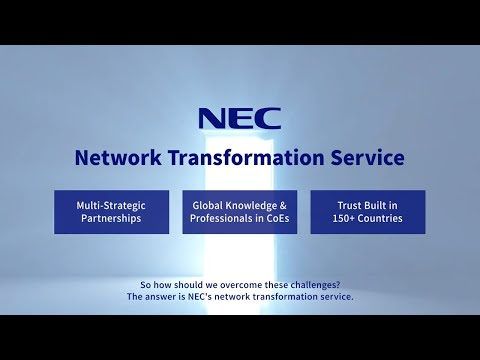
NEC has carved out a distinctive role in the 5G Core ecosystem, focusing on open, multi-vendor networks rather than market share dominance. Its cloud-native 4G/5G Converged Core, built on open-source technology, enables flexible deployment across private and public clouds while helping operators avoid vendor lock-in.
A founding supporter of Open RAN, NEC combines platform-agnostic design with more than 120 years of systems integration expertise. Strategic alliances with AWS and Red Hat highlight its ability to integrate and optimise best-of-breed solutions, positioning NEC as a trusted 5G integrator.
8. IBM
Founded: 1911
Annual Revenue: US$62.8bn
Chief Executive Officer: Arvind Krishna
Number of Employees: 293,400
IBM has established itself as a pivotal 5G Core vendor by leveraging its enterprise software and hybrid cloud expertise. Following its acquisition of Red Hat, IBM delivers Red Hat OpenShift as a leading platform for telco-grade CNFs. Its flagship solution, Cloud Pak for Network Automation, provides intent-driven orchestration and zero-touch operations essential for advanced services such as network slicing.
A landmark agreement with Telefónica to build its UNICA Next 5G core platform validates IBM’s strategy, positioning it as the automation and orchestration layer of next-generation telecoms.
7. Oracle
Founded: 1977
Annual Revenue: US$57.4bn
Chief Executive Officers: Clay Magouyrk & Mike Sicilia
Number of Employees: 162,000
Oracle has reinvented itself as a leading end-to-end 5G Core and BSS/OSS vendor, moving far beyond its database roots. Its cloud-native software stack spans critical core functions such as the Policy Control Function (PCF) and Converged Charging System (CCS), tightly integrated with advanced analytics and automation.
Its unified approach bridges the long-standing gap between network operations and monetisation, enabling CSPs to generate revenue from services like enterprise network slicing and IoT. Significant contract wins with Orange and DISH Wireless validate Oracle’s strategy and market strength.
6. Broadcom (VMware)
Founded: 1961
Annual Revenue: US$54.5bn
Chief Executive Officer: Hock Tan
Number of Employees: 37,000

Broadcom has emerged as a pivotal 5G Core enabler through its acquisition of VMware, which delivers the Telco Cloud Platform, a carrier-grade, cloud-native infrastructure hosting both VNFs and CNFs across any cloud environment.
Validated by major vendors including Ericsson, Samsung and Nokia, the platform’s “any function, any cloud, any hardware” approach positions Broadcom as a neutral, horizontal force within the 5G ecosystem. By providing the trusted foundation on which CSPs run mission-critical 5G Core workloads, Broadcom has secured a central, system-level role in the global telecoms value chain.
5. ZTE
Founded: 1985
Annual Revenue: US$17bn
Chief Executive Officer: Xu Ziyang
Number of Employees: 68,375
ZTE has established itself as a leading global 5G Core vendor, delivering a full suite of solutions alongside its broader RAN and transport portfolio. Consistently ranked among the top four MCN vendors worldwide by Dell’Oro Group, ZTE’s strength is anchored in China, the world’s largest and most advanced 5G Standalone market.
In China, it operates at unmatched scale, enabling real-world testing and hardening of its 5G Core under extreme performance demands. The unique operational maturity, proven with leading operators such as China Mobile, supports ZTE’s growing international expansion and competitive strength.
4. Samsung Electronics
Founded: 1938
Annual Revenue: US$220.6bn
Chief Executive Officer: Young-Hyun Jun
Number of Employees: 267,860
Samsung Electronics has rapidly emerged as a credible end-to-end 5G vendor, extending its reputation in RAN to deliver a fully virtualised, cloud-native 5G Core. Securing contracts with Tier-1 operators in North America and Asia, it has proven its capability at scale. Its device-to-core vertical integration—spanning chipsets, world-leading devices, RAN and Core infrastructure—creates unique opportunities for cross-layer optimisation.
Strategic acquisitions, such as TeleWorld Solutions, further enhance integration and deployment strength. The holistic ecosystem enables Samsung to deliver differentiated, performance-optimised 5G services, positioning it as a powerful challenger to long-established rivals.
3. Cisco Systems
Founded: 1984
Annual Revenue: US$56.6bn
Chief Executive Officer: Chuck Robbins
Number of Employees: 86,200
Cisco Systems brings decades of leadership in IP networking and security to play a pivotal role in the 5G Core ecosystem. While not a traditional MCN market share leader, Cisco extends its strengths in routing, cloud networking and automation into a secure, cloud-native 5G Core platform.
Strategic moves, including the acquisition of Acacia Communications, enhance its transport and interconnectivity capabilities. Its unique value lies in providing the trusted, high-performance IP fabric that supports all 5G Cores, ensuring resilience, programmability and security across diverse, disaggregated architectures.
2. Nokia
Founded: 1865
Annual Revenue: +US$24bn
Chief Executive Officer: Justin Hotard
Number of Employees: +86,700
Nokia is a global leader in 5G, recognised as a top-tier Mobile Core Network vendor by independent analysts such as Dell’Oro Group. Its strength lies in its cloud-native 5G Core portfolio, which provides CSPs with a secure, low-risk pathway from 4G to 5G standalone.
Backed by Nokia Bell Labs’ innovation, it has achieved significant milestones, including securing hundreds of 5G contracts worldwide and building trusted partnerships with leading operators.
Uniquely, Nokia offers an end-to-end solution spanning RAN, transport and Core, enabling operators to simplify integration and reduce risk. The strategic acquisition of Alcatel-Lucent enhanced its IP and optical transport capabilities, further strengthening its proposition. Nokia plays a pivotal role in the enterprise and private networks market, driving digital transformation.
1. Ericsson
Founded: 1876
Annual Revenue: +US$23.5bn
Chief Executive Officer: Börje Ekholm
Number of Employees: 91,940
Ericsson is a global leader in the 5G Core market, recognised for its substantial market share, technological innovation and extensive live deployment experience. Independent firms such as Omdia and Gartner consistently rate Ericsson highest for its cloud-native dual-mode 5G Core, automation and policy and charging capabilities.
A key milestone is its role in powering most of the world’s first 5G Standalone networks, with its core now live in 34 of more than 60 commercial 5G SA deployments worldwide. Ericsson’s dual-mode architecture is unique, supporting both 4G and 5G functions on a common, cloud-native platform, easing operators’ migration to 5G SA while safeguarding existing services.
The acquisition of Cradlepoint further strengthened its enterprise reach, ensuring Ericsson leads in both consumer and business 5G markets through proven performance and innovation.