From an experimental framework to a fully industrialised, multi-billion-dollar reality, once a theoretical model centred on disaggregation and interoperability, Open RAN is now driving a profound transformation across global telecommunications infrastructure.
The evolution presents new opportunities for innovation while challenging the dominance of long-established vendors.
The industry’s focus has shifted from proving the technology’s feasibility to managing it efficiently at scale.
Now the goal is to achieve carrier-grade reliability and performance while simplifying complex multi-vendor integration and reducing the total cost of ownership. Success in these deployments will set the benchmark for the broader telecoms sector.
This week, Telco Magazine explores the top 10 Open RAN Vendors.
10. Fujitsu
- Founded: 1935
- Revenue: US$23.3bn
- Chief Executive Officer: Takahito Tokita
- Employees: 113,000
Fujitsu has emerged as a key Open RAN vendor, providing O-RAN-compliant radio units and software to operators worldwide.
Its influence was highlighted through its foundational role in Rakuten Mobile’s greenfield network in Japan, demonstrating the feasibility of fully virtualised, multi-vendor architectures at scale.
Recognised for its carrier-grade, high-performance hardware, Fujitsu continues to collaborate with operators such as NTT DOCOMO and infrastructure partners like Dell, supporting the development and validation of interoperable Open RAN solutions.
9. Hewlett Packard Enterprise (HPE)
- Founded: 2015 (from Hewlett-Packard, founded 1939)
- Revenue: US$31.1bn
- Chief Executive Officer: Antonio Neri
- Employees: 61,000
Hewlett Packard Enterprise (HPE) stands as a key player in the Open RAN ecosystem, delivering the telco-grade compute and orchestration layers essential for running virtualised networks at scale.
Leveraging its ruggedised, NEBS-compliant HPE ProLiant server family, HPE provides the open, flexible and high-performance infrastructure powering large-scale operator deployments such as TELUS.
Through strategic collaboration with Nokia and the development of its vendor-agnostic HPE RAN Automation solution, HPE continues to advance simplified, scalable and interoperable Open RAN innovation.
8. Dell Technologies
- Founded: 1984
- Revenue: US$95.5bn
- Chief Executive Officer: Michael Dell
- Employees: 108,000
Dell Technologies has become a cornerstone of the Open RAN movement, providing the powerful PowerEdge servers that underpin virtualised Distributed and Central Units.
Beyond its telco-grade hardware, Dell’s Open Telecom Ecosystem Lab (OTEL) serves as a global hub for multi-vendor integration, validation and certification, supporting operators such as Vodafone, AT&T and NTT DOCOMO in streamlining complex deployments.
With innovations like its inline Open RAN Accelerator Card, Dell continues to enhance performance and efficiency across virtualised network environments.
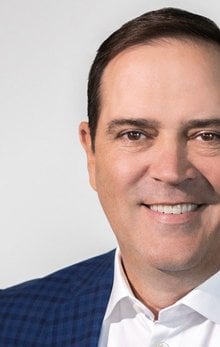
7. Cisco Systems
- Founded: 1984
- Revenue: US$56.7bn
- Chief Executive Officer: Charles H. Robbins
- Employees: 86,200
Cisco, a global leader in IP networking, plays a pivotal role in enabling the transport layer of Open RAN architectures.
It has led innovation in fronthaul solutions – the latency-sensitive link between radio and distributed units – through technologies such as its NCS 540 Fronthaul Router and contributions to the Open Fronthaul Gateway specification.
By converging legacy CPRI and new O-RAN eCPRI traffic, Cisco supports seamless modernisation for brownfield operators, while partnerships with Rakuten Symphony extend its integrated Open RAN solutions worldwide.
6. NEC Corporation
- Founded: 1899
- Revenue: US$22.5bn
- Chief Executive Officer: Takayuki Morita
- Employees: 105,000

NEC has established itself as a leading systems integrator and end-to-end solution provider within the Open RAN landscape, proving its expertise through major global deployments.
Its involvement in Rakuten Mobile’s greenfield network and collaboration with NTT DOCOMO highlight NEC’s capabilities in delivering Open vRAN software (CU/DU) and advanced Radio Units.
Guided by a “radically open” philosophy and strong alignment with O-RAN Alliance standards, NEC continues to drive innovation in SMO and RIC technologies, enabling seamless multi-vendor network integration at scale.
5. Broadcom
- Founded: 1991 (Broadcom Corporation)
- Revenue: US$54.5bn
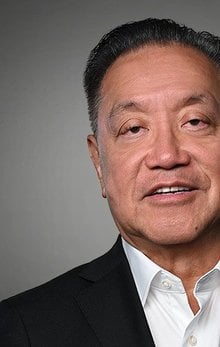
- Chief Executive Officer: Hock E. Tan
- Employees: 37,000
Broadcom, while not a direct systems vendor, is a key enabler of the Open RAN hardware ecosystem through its high-performance silicon solutions.
It develops custom ASICs, RF filters and processors that support carrier-grade Radio Units, Distributed Units and fronthaul equipment.
As Open RAN adoption accelerates, Broadcom’s focus on performance, power efficiency and cost is vital for network scalability.
Its advanced technology supports numerous vendors, establishing Broadcom as a foundational yet often unseen force driving the Open RAN supply chain.
4. Qualcomm
- Founded: 1985
- Revenue: US$40.7bn
- Chief Executive Officer: Cristiano R. Amon
- Employees: 49,000
Qualcomm, a leader in mobile silicon, is extending its expertise into Open RAN network infrastructure with a dedicated portfolio.
Its 5G RAN Platforms, including the X100 5G RAN Accelerator Card for DUs and the QRU100 5G RAN Platform for Massive MIMO radios, deliver high-performance, energy-efficient, O-RAN-compliant solutions.
Large-scale commercial deployments with operators such as Viettel in Vietnam and NTT DOCOMO in Japan demonstrate the readiness of Qualcomm’s platforms for real-world networks, cementing its role as a pivotal technology enabler for a broad ecosystem of hardware vendors.
3. Intel
- Founded: 1968
- Revenue: US$53bn
- Chief Executive Officer: Lip-Bu Tan
- Employees: 75,000
Intel has become a central technology enabler in the Open RAN and vRAN landscape. Its Xeon Scalable processors provide the essential general-purpose compute platform for virtualised baseband functions, supporting the adoption of commercial-off-the-shelf (COTS) hardware in RAN deployments.
The Intel FlexRAN reference architecture offers a foundational software platform for a broad ecosystem of partners to develop, test and optimise vRAN solutions.
Through extensive collaborations with leading industry players, Intel drives performance, efficiency and standardisation across virtualised networks.
2. Nokia
- Founded: 1865
- Revenue: US$20.6bn
- Chief Executive Officer: Pekka Lundmark
- Employees: 86,000
Open RAN ecosystem. As the first major RAN vendor to join the O-RAN Alliance, it has become the top contributor to technical specifications, serving as co-chair of up to three key working groups focused on the fronthaul interface and RIC.
Its “anyRAN” strategy offers operators unparalleled flexibility, enabling hybrid deployments of traditional, Cloud and Open RAN solutions on a unified platform.
With innovations such as the MantaRay SMO, ReefShark silicon and collaborations with major cloud providers, Nokia has achieved notable global commercial wins and trials, demonstrating both standards leadership and robust, real-world network performance.
1. Ericsson
- Founded: 1876
- Revenue: US$23.5bn
- Chief Executive Officer: Börje Ekholm
- Employees: 108,000

Ericsson, the global leader in traditional RAN, has taken a strategic and influential role in advancing Open RAN.
It focuses on “industrialising” Open RAN, delivering carrier-grade performance, security and scalability for the world’s largest networks.
The approach was validated through its landmark US$14bn contract with AT&T to deploy a nationwide Open RAN network, the largest of its kind and a strong endorsement of Ericsson’s execution capabilities.
While actively contributing to the O-RAN Alliance, Ericsson’s strength lies in providing integrated, high-performance Open RAN-ready solutions, enabling major operators to modernise and evolve their brownfield networks at scale confidently.
Company portals







Executives
Antonio Neri
President & CEO
Börje Ekholm
President and CEO
Chuck Robbins
Chair and CEO
Cristiano R. Amon
President and Chief Executive Officer
Hock Tan
President and Chief Executive Officer
Lip-Bu Tan
Chief Executive Officer
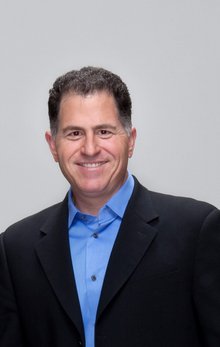
Michael Dell
CEO
Pekka Lundmark
Special Advisor, former CEO
Takayuki Morita
President and CEO (Representative Director)