Deutsche Telekom and T-Mobile: Mega Merger Talks Underway
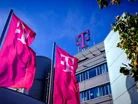
Deutsche Telekom is exploring a potential merger deal with T-Mobile US, in what could become the largest ever public merger, according to data from LSEG.
The company already owns 53% of T-Mobile, but fully acquiring it could create a company with a market capitalisation of nearly US$300bn.
According to Reuters, the German group's shares fell about 5% on Wednesday after news of the talks surged.
Investors' stakes may be at risk of dilution, as owning a smaller slice of the business following a merger tends to push prices down.
The market value of a potential deal could support further acquisitions, according to Morgan Stanley analysts.
Could the deal face regulatory and geopolitical hurdles?
Talks of a deal come against a backdrop of strained diplomatic and economic relations between Germany and the US, overshadowed by tariffs and tensions linked to the Iran war.
Dealmaking is beginning to recover following Iran conflicts, following a slump in weeks after the start of the war.
Blair Levin, Policy Adviser at New Street Research, said a deal may trigger political resistance from the US, but would unlikely be blocked solely on regulatory grounds.
He told Reuters: "The bottom line is that while there will be antitrust, national security and regulatory investigations, those investigations are unlikely to find a problem that results in the US government blocking the deal."
William Kovacic, Director of the Competition Law Center at George Washington University, also said that the majority share of T-Mobile that Deutsche Telekom already holds would alleviate antitrust concern.
Could a deal capitalise on a 200 million user base?
A merger, which could add to a nearly US$300bn value, would make it the world's most valuable telco group with more than 200 million mobile subscribers.
It would have reach across both the US and Europe, a scale which brings leverage.
A larger customer base would help the company spread the cost of network investment in 5G and fibre while strengthening the company's hand in negotiations with vendors and partners.
It would also open the door to more unified services for multinational customers that expect consistent connectivity across markets.
Size alone, however, does not guarantee results. Integrating networks and aligning operations across two very different telco environments presents challenges.
Even so, the appeal of turning a vast subscriber base into a platform for growth and investment is clear for closer transatlantic alignment.

Ownership structure and market reaction
Any deal would also need backing from the German state, Deutsche Telekom’s largest shareholder. The government and state-lender KfW hold a 28% stake, however KfW's holding risks dilution if the two companies merge.
BNP Paribas Equity Research Senior Analyst Sam McHugh told Reuters: "A full merger would see this diluted to 17%-18% at current valuations, below the ~25% threshold which German authorities have signalled would be a threshold for 'strategic businesses' in the past."
From a market perspective, the initial reaction reflects uncertainty. Investors are weighing the long-term benefits of scale against short-term risks, including integration costs and regulatory delays.
T-Mobile’s shares have already lost a quarter of their value over the past year, while Deutsche Telekom's value has declined by about 10%.
For telco operators, the proposed merger highlights a broader trend. Companies are seeking new ways to expand beyond saturated domestic markets, often through cross-border consolidation.
Access to capital, spectrum and infrastructure holds significant benefits, and deals of this size aim to address those pressures while redefining competitive dynamics.