The US FCC to Ban Huawei, ZTE in US Subsea Cables by 2025
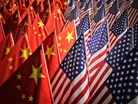
The United States is advancing a comprehensive ban on Chinese technology and company involvement in submarine cables connected to US territory. The strategic shift stems from intensifying security concerns, predominantly focused on espionage and physical sabotage, and signals a fundamental change in global connectivity governance.
Regulatory action on Chinese subsea technology
The policy overhaul represents the culmination of several years of sustained diplomatic pressure and intervention.
Beginning in 2020, the United States Authorities began blocking submarine cable projects designed to connect the US to Hong Kong, citing security risks associated with potential Chinese involvement.
In 2021, these concerns extended internationally, as a World Bank-led cable project in the Pacific was cancelled after the US warned that it could not proceed with Chinese companies as contractors.
The geopolitical dimension was further accentuated in 2023, when Taiwan publicly accused Chinese vessels of deliberately cutting two critical cables to its offshore Matsu Islands, drawing attention to the vulnerability of undersea infrastructure in contested waters.
By late 2024, the FCC’s impending ban on Chinese technology and corporate participation in any US-connected cable project was set to take effect. The action gained added urgency with the formal public announcement of newly proposed rules in July 2025, and the regulatory process rushed toward adoption.
The FCC scheduled its Open Meeting for 7 August 2025, to finalise and implement these new measures.
Details of the FCC’s ban and strategic justification
- Ban the use of equipment and services from Chinese “foreign adversary” firms such as Huawei, ZTE, China Telecom and China Mobile in all future undersea cable projects linking the US.
- Presume denial of licence applications and capacity leasing agreements with such entities, sharply curtailing their direct and indirect access to US networks.
- Establish stringent cyber and physical security requirements for cable operations and accelerate the transition to “trusted technology,” including promoting the use of American ships for repair and maintenance.
FCC Chairman Brendan Carr says of the measures: “We have seen submarine cable infrastructure threatened in recent years by foreign adversaries, like China.
"We are therefore taking action here to guard our submarine cables against foreign adversary ownership and access, as well as cyber and physical threats.”
“Submarine cables are the unsung heroes of global communications, carrying 99% of all Internet traffic.
"As the US builds out the data centres and other infrastructure necessary to lead the world in AI and next-gen technologies, these cables are more important than ever.”
Market dynamics and forward-looking impact
Investment in subsea cables is on the rise, with forecasts projecting an increase from $ 7.96 billion in 2023 to $ 9.8 billion by 2029.
The growth is primarily propelled by hyperscale cloud providers, Google, Amazon and Microsoft, which are investing in new cable routes, such as Google’s Nuvem, to secure lower transmission costs and greater control over international data flows.
Geographic expansion is evident in the trans-Pacific and intra-Asia–Pacific routes, while the Middle East is rapidly scaling its infrastructure. The regional subsea market here is set to hit US$26.1bn in 2025, reaching US$35bn by 2035—an anticipated CAGR of 10%.
In parallel, the sector is responding with advanced technology, from smart sensor integration for cable health monitoring to autonomous vessels improving installation and maintenance accuracy.
The surge in offshore wind and the drive for integrated data-power solutions are spurring new demand for resilient, multi-purpose cable infrastructure.

Security and geopolitical consequences
The US ban marks a decisive pivot toward “trusted vendor” ecosystems, with allied governments expected to follow suit. Heightened regulatory scrutiny and new incident reports, such as deliberate cable damage in key regions, are fuelling further investment in route diversity, redundancy and cyber defence.
The FCC’s policy is part of a broader push to safeguard the core infrastructure of the digital world. Discussions at events like techUK and SubTel Forum are increasingly focusing on best practices, regulatory harmonisation, and sector resilience as top priorities.
An industry at the crossroads
The sweeping changes in policy and market strategy evident in 2025 position the submarine cable sector at the nexus of investment, innovation, security and diplomatic tension.
The reality is that the rules for subsea infrastructures are being rewritten where bandwidth meets borders and security is now as vital as speed or scale. The FCC’s 7 August vote will be a watershed for telecoms globally, with knock-on effects for vendors, carriers, hyperscalers, and governments worldwide.