IEA: Energy Efficiency Gains Strain Networks and Workforce

Global energy efficiency continues to rise, but at a pace that lags far behind international targets.
The International Energy Agency’s (IEA) Energy Efficiency 2025 report shows that energy efficiency is improved by 1.8% in 2025, up from around 1% in 2024. Yet, the average rate since 2019 remains just 1.3% per year, falling short of the COP28 target of a 4% annual gain by 2030.
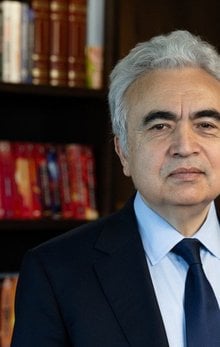
IEA Executive Director Dr Fatih Birol says: “The acceleration in global progress on energy efficiency that we’re seeing in 2025 is encouraging, including positive signs in some major emerging economies.”
He adds: “But our analysis shows that governments need to work even harder to ensure efficiency’s full range of benefits are enjoyed by as many people as possible.
Energy efficiency has the power to enhance people’s lives and livelihoods through greater energy security, more affordable bills, improved economic competitiveness and lower emissions.”

The economics behind efficient energy
The IEA notes that sustainable technology is becoming a cost-effective option, pushing back against the assumption that green solutions must come at a premium.
Although some technologies may carry a higher upfront price, many are sold at similar costs to traditional models and bring long-term savings due to reduced energy use.
Consumers who buy energy-efficient air conditioners in 2025 save up to 30% on energy costs, despite paying roughly the same upfront. In the industrial sector, energy efficiency ranks as the top defence against price fluctuations, according to a 2025 IEA survey on competitiveness.
It further applies to retrofitting. Spending on retrofits and building envelopes has increased by over 20% since 2019 across China, the US and the European Union, reaching around US$120bn in 2024.
In the Netherlands, a household can save between US$300 and US$500 per square metre in energy costs over 20 years, after investing around US$40,000 on insulation and high-performance heat pumps.
The report makes clear that these investments make economic sense when measured over time.
Cooling demand and its unseen cost
The IEA identifies cooling as the fastest-growing energy use in buildings since 2000, increasing by more than 4% annually.
The rise is driven by greater access to air conditioning and higher living standards, but most of the devices in use are not energy efficient.
The report states that if all air conditioners sold since 2019 had met the highest efficiency standards, global electricity demand would have grown far less – potentially avoiding a spike equal to the total electricity used by data centres in that same period.
Looking ahead, demand from data centres is set to increase further due to artificial intelligence (AI).
The IEA expects global data centre electricity consumption to double between 2025 and 2030, reaching around 945 terawatt-hours (TWh). For comparison, that is equivalent to the electricity use of Japan in 2024.
However, the report says AI can also cut energy use. It estimates AI applications could unlock 8 exajoules (EJ) of energy savings by 2035 – similar to the entire industrial energy demand of the European Union today.
AI systems can find inefficiencies, enhance process models and support smarter operations without much additional input.
Use cases include demand forecasting, inventory control and optimised transport logistics, which can help support hub-and-spoke supply models.
Skills gap blocks efficiency growth
Despite the available technologies and tools, one of the biggest barriers remains a lack of skills. The IEA highlights that digital infrastructure, trained personnel and trust in systems prevent many businesses – especially small and medium-sized enterprises (SMEs) – from using AI to optimise energy use.
More broadly, the global energy efficiency sector employs nearly 18 million people in 2024. But 72% of employers report a shortage of skilled workers, with 60% expecting the issue to affect operations within five to 10 years.
About half already face difficulties replacing retiring employees.
The issue is not limited to energy efficiency. According to LinkedIn's 2025 Green Skills Report, the demand for sustainability roles is growing nearly twice as fast as workers are acquiring the necessary green skills. The mismatch between hiring needs and workforce readiness puts further pressure on the sector’s ability to expand.
The IEA’s message is clear: while energy efficiency is progressing, the pace is not fast enough. Without action on skills, better policies and smarter use of technology, the world risks falling short of its energy and climate goals.
Company portals



Executives
Fatih Birol
Executive Director