
KDDI: Can Digital Twins Kickstart the 6G Era?

KDDI and KDDI Research have launched an initiative to develop a high-fidelity RAN Digital Twin. They will do so in collaboration with NVIDIA, Keysight Technologies and Samsung Research America.
The project’s backers are aiming to deliver a prototype by the end of March 2028. By the end of FY2030 they are seeking to extend the project to support many use cases and validate the RAN Digital Twin’s performance on KDDI’s commercial network.
The RAN Digital Twin is being developed with two initial use cases in mind.
The first is acting as a training and evaluation platform for AI network optimisation tools. The key benefits from this approach are that AI can be trained and validated without impacting live networks, many scenarios can be simulated in parallel and operators can see how their networks hold up under “what-if” scenarios.
The second use case is serving as a test-bed for new AI-based RAN features, particularly those around the air interface and intended to boost communication quality and improve energy efficiency. The goal is to enable lab-based testing of new features and algorithms across diverse virtual environments before field deployment. Through doing so, this approach would boost quality assurance and reduce the number of development cycles.
The RAN Digital Twin must be accurate in two key ways for it to be of value. It must faithfully copy real-world radio-wave propagation, while accurately reproducing each telecom vendor’s proprietary behaviour.
KDDI Research is addressing the former with its AI Propagation Technology. The latter involves running actual communication-capable vRAN (Virtualised RAN) software on the digital twin platform.
Who does what?
KDDI and KDDI Research have already developed the use of multiple AI agents to carry out area optimisation at base stations and are rolling it out across nationwide commercial networks.
The roles of each company in the initiative are:
- KDDI: Providing commercial network data and driving commercial trials
- KDDI Research: Creating use cases, developing propagation prediction techniques and defining technical requirements
- NVIDIA: Delivering the high-fidelity digital twin infrastructure
- Keysight: Bringing the user equipment emulation technology needed to support development and validation
- Samsung Research America: Providing vRAN technology

KDDI believes that the RAN Digital Twin could significantly cut the time required to bring new innovations to market.
"In recent years, KDDI has been rated the world's No.1 in connected experience by a third party,” says Satoshi Konishi, President and CEO at KDDI Research and Senior Director at KDDI Corporation.
“As networks grow increasingly autonomous and AI-driven in the 6G era, we are determined to raise that quality even higher.
“With the RAN Digital Twin, we can train and validate AI not only against real-world scenarios but even against future ones yet to unfold, accelerating innovation and dramatically shortening time to market.
“We are delighted to collaborate with NVIDIA, Keysight and Samsung Research America to build this foundation and deliver an even better communication experience to our customers."
This is a sentiment echoed by NVIDIA’s leadership team.
"6G will be born in simulation and our collaboration with KDDI, Samsung, and Keysight will pioneer this future,” says Soma Velayutham, VP of Telecoms and AI at NVIDIA Corporation.
“As networks become increasingly autonomous, more complex AI algorithms will be the critical engines driving them.
“To develop these algorithms safely and at massive scale, the NVIDIA Aerial Omniverse Digital Twin provides a high-fidelity ‘AI-RAN gym’ where operators can rigorously train, simulate, and validate new models before ever deploying them to a live network."
Keysight also emphasises the importance of the RAN Digital Twin from an AI safety perspective.
"RAN Digital Twins are the essential gatekeepers for safe, AI-driven network automation, requiring a zero-risk validation environment before commercial deployment,” explains Kailash Narayanan, SVP and President of the Communications Solutions Group at Keysight.
“Keysight combines its advanced digital twin and scale emulation tools with technology from KDDI, NVIDIA, and Samsung to simulate the precise conditions needed to validate complex AI algorithms.
“This collaborative framework gives operators the trusted foundation they need to innovate confidently, eliminating live-network risks and fast-tracking the transition to autonomous 6G."
"As a global leader in today's commercial vRAN deployment, Samsung recognises RAN Digital Twin technology as a vital tool to drive the future AI-native vRAN in the 6G era,” adds Charlie Zhang, EVP at Samsung Research America. “We are thrilled to collaborate with KDDI, KDDI Research, NVIDIA and Keysight on developing a high-fidelity RAN Digital Twin, with the goal of enabling safer and more efficient optimisation for future AI-driven networks."
Company portals

Executives
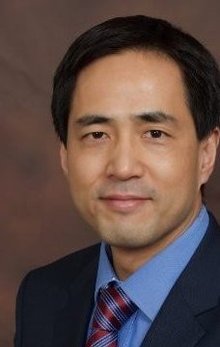
Charlie Zhang
Executive Vice President
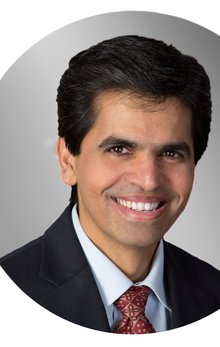
Kailash Narayanan
Vice President and General Manager
Satoshi Konishi
President and CEO at KDDI Research, Senior Director at KDDI Corporation

Soma Velayutham
General Manager, AI | 5G | Telecoms