Trump Bans Nvidia Blackwell AI Chip Exports Beyond the US
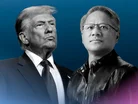
US President Donald Trump has announced the country will restrict Nvidia’s most advanced Blackwell chips, to American firms only. This move cuts off China from access and casts serious doubt on South Korea's planned chip deals. The White House decision intensifies the ongoing battle between world powers over AI dominance and semiconductor control.
Trump announces the decision in a televised interview on CBS’s 60 Minutes and later repeats his stance while speaking to reporters aboard Air Force One.
"The most advanced, we will not let anybody have them other than the United States,” Trump tells 60 Minutes. He adds: “We don’t give [the Blackwell] chip to other people.”
His statement refers to Nvidia’s Blackwell line of chips, currently the most powerful semiconductors designed for AI and machine learning (ML) systems. These chips are crucial for training large AI models and accelerating data processing tasks. Blocking access to this technology reshapes international tech relationships and trade expectations.

South Korea’s Nvidia deal faces uncertainty
The restriction comes just as Nvidia finalises plans to deliver more than 260,000 Blackwell chips to South Korea. Leading South Korean companies, including Samsung Electronics, are set to receive the semiconductors as part of Nvidia’s broader Asia-Pacific expansion.
Samsung manufactures memory chips and consumer electronics, while Nvidia designs its chips in the US, has them produced by manufacturing partners in Taiwan, and packages them in Malaysia before distributing them worldwide. The decision to limit exports brings uncertainty to this international production pipeline.
The timing of Trump’s announcement contrasts sharply with earlier guidance from his administration. A few months ago, the White House released an AI strategy blueprint that aimed to expand AI exports to allies. The document positioned US-made AI technologies as tools to reinforce American influence while supporting global partners.
Nvidia’s South Korea deal appeared aligned with that policy, which now seems at odds with Trump’s latest directive. Whether the chips still ship remains unclear, but with the President saying only US firms can use top-end Blackwell technology, international contracts could face revision or cancellation.
Scaled-down chips and China’s military concerns
Trump does not rule out the possibility of allowing China access to limited, lower-grade versions of the Blackwell chips. He confirms to 60 Minutes: “We will let them deal with Nvidia but not in terms of the most advanced.”
Such a policy opens the door for diluted chip versions to reach Chinese firms, but it has sparked concern in Washington. Lawmakers argue even stripped-back semiconductors could contribute to China’s AI development or enhance its military capabilities.
John Moolenaar, a Republican congressman and chair of the House Select Committee on China, compares the idea to nuclear weapons sharing. “That would be akin [to] giving Iran weapons-grade uranium,” he says.
The matter has drawn attention since August, when Trump first hints at allowing downgraded chip exports to China. At the time, he suggests a potential discussion with Chinese President Xi Jinping during their summit in South Korea. However, Trump later says the issue is never raised during the meeting.
This ambiguity leaves chipmakers, allies and global tech firms uncertain about the future of AI semiconductor trade.
Nvidia’s Position and Chinese Market Reality
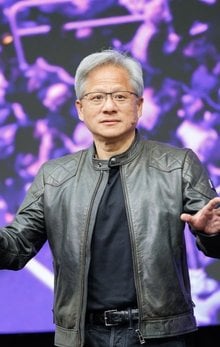
Nvidia’s Chief Executive Officer Jensen Huang confirms the company has not applied for a US export licence for Chinese chip sales. He points to China’s current stance on US tech firms as the reason.
“They’ve made it very clear that they don’t want Nvidia to be there right now,” Huang says during a developers’ event. He adds that access to the Chinese market remains essential for Nvidia to continue funding its US-based research and development.

That funding model puts the company in a difficult position. On one side, it faces US policy shifts and geopolitical pressure. On the other, it depends on international sales—including China—for sustaining product development.
Huang’s comments suggest Nvidia might comply with export restrictions, but the company also sees global sales as critical to its future. Any lasting ban on Blackwell chip exports could reshape Nvidia’s business strategy.
As tensions rise between the US and China over AI capabilities, Trump’s move to block top-tier semiconductors from global markets marks a decisive point in the tech rivalry. The full impact on chip manufacturers, US allies and AI innovation remains to be seen, but the geopolitical signal is clear: Blackwell technology stays within US borders.


Executives
Jensen Huang
Founder and CEO