The global telecommunications industry is at a crossroads that presents both immense challenges and significant opportunities. The traditional vendor-client model is giving way to co-creative partnerships, where suppliers act as strategic collaborators rather than transactional providers.
For telcos, the way forward lies in embracing a multi-partner approach, establishing a unified data foundation while investing equally in talent and technology. AI is no longer an add-on; it is the foundation of the AI-native telco, an enterprise built on automation, data-driven operations and continual innovation. Given their existing infrastructure and market reach, telcos are in a prime position to commercialise their own AI-as-a-Service models.
10. SAP
Employees: 111,960
CEO: Christian Klein
Founded: 1972
SAP is a vital AI partner for telcos, though not on the network side. Its strength lies in transforming core business functions such as finance, supply chain and HR through AI-driven ERP, SCM and workforce tools. With Business AI and Joule Copilot, SAP helps operators optimise financials, streamline 5G supply chains and manage talent with precision.
A landmark partnership with Vonage now integrates network APIs into business workflows, reinforcing SAP’s role in embedding AI into the backbone of telco operations.
9. Accenture
Employees: 774,000
CEO: Julie Sweet
Founded: 1989

When telcos need to turn an AI strategy into a large-scale reality, they turn to Accenture. It does not build AI models itself but specialises in integrating technologies from partners like AWS, Google and Microsoft.
Its impact is clear in projects such as automating metadata for Telia and delivering an AI-powered contact centre for VMO2. The examples illustrate how Accenture modernises operations and elevates customer experiences, securing its role as a trusted architect of the AI-native telco.
8. IBM
Employees: 293,400
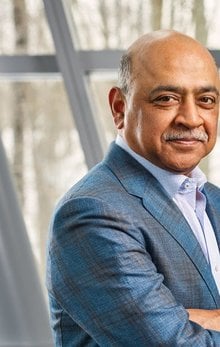
CEO: Arvind Krishna
Founded : 1911 (as CTR)
IBM is a strategic AI partner for telcos, combining hybrid cloud expertise with consulting scale to drive transformation. Its watsonx platform supports automation across networks, customer service and IT operations.
A standout example is its work with Deutsche Telekom, where IBM Concert cut patching times for critical vulnerabilities by 90%. By focusing on intelligent automation and co-creation, IBM helps telcos deploy AI securely across complex hybrid environments, boosting resilience, efficiency and the ability to manage large-scale digital change.
7. Salesforce
Employees: +80,000
CEO: Marc Benioff
Founded : 1999

For telcos, Salesforce is the go-to AI partner for transforming customer experience. Its Communications Cloud and Agentforce platforms give operators a unified customer view, enabling a shift to truly customer-centric models.
With Einstein, its embedded generative AI, Salesforce powers personalised engagement, smarter sales and automated service at scale. Backed by global consulting partners and a vast AppExchange ecosystem, it supports rapid, large-scale deployment, making Salesforce a key force in driving loyalty, efficiency and operational transformation across the telecommunications sector.
6. Oracle
Employees: 162,000
CEO: Clay Magouyrk & Mike Sicilia
Founded: 1977

Oracle is a strategic AI partner for telcos, blending decades of expertise in BSS/OSS and databases with the rapid rise of Oracle Cloud Infrastructure (OCI). Its “Cloud for Telcos” platform supports everything from IT workloads to demanding 5G network functions.
With AI built into its suite, especially the Oracle Digital Business Experience, it helps telcos automate assurance, personalise services and detect fraud. By hosting AI training workloads, OCI has proven itself a credible, competitive choice for telcos scaling AI adoption.
5. Alphabet (Google Cloud)
Employees: 183,320
CEO: Sundar Pichai
Founded : 2015 (Alphabet), 1998 (Google)
Google Cloud is a leading AI partner for telcos, combining global-scale infrastructure with deep expertise in AI and data analytics. Its “AI-Driven Telecom” strategy helps operators automate networks, personalise customer experiences and create new revenue streams.
With tools such as Vertex AI, Gemini models and BigQuery, it enables transformation across telecom operations. High-profile collaborations with Deutsche Telekom, Bell Canada and TELUS showcase its growing influence and mark a key step in advancing AI adoption across the telecommunications industry.
4. Amazon (AWS)
Employees: 1,556,000
CEO: Andy Jassy
Founded : 1994

Amazon Web Services (AWS) is a foundational AI partner for telcos, powered by its secure, scalable cloud infrastructure. Its AI/ML portfolio, led by Amazon Bedrock, gives operators access to top foundation models for building generative AI applications.
AWS focuses on practical outcomes, from AI-driven contact centres to personalised services and churn reduction. Key partnerships with operators and vendors reinforce its central role, while the launch of its AI Agent Marketplace marks a significant step in democratising telecom AI adoption at scale.
3. Cisco Systems
Employees: 90,400
CEO: Chuck Robbins
Founded : 1984
Cisco’s goal is to create secure, automated networks built to handle massive AI workloads, from data centres to the network edge. Key innovations include the Silicon One processor for AI, Nexus Hyperfabric for faster infrastructure deployment and the AI-Powered Security Cloud, which predicts and prevents threats.
Through collaborations with NVIDIA, BT and Zain KSA, Cisco is shaping next-generation networks that power AI-driven services. Their strategy goes beyond connectivity, building intelligent infrastructure designed for the demands of the AI era.
2. Microsoft
Employees: 228,000
CEO: Satya Nadella
Founded: 1975
Microsoft has established itself as one of the most influential AI partners for the telecoms industry, offering a fully integrated ecosystem that spans cloud infrastructure with Azure, enterprise productivity through Microsoft 365 and business applications via Dynamics 365.
The unified approach means telcos can manage everything from network operations to customer engagement within a single AI-enabled platform. Its impact is evident, with 96% of tier-1 operators already using Microsoft’s AI technologies, clear proof of its deep industry penetration.
A key milestone is the Telco Industry Data Model within Microsoft Fabric, which helps operators unify complex, scattered data and accelerate AI deployment across networks and customer-facing functions.
Microsoft is co-innovating with leading players such as Telefónica, Vodafone and AT&T to develop intelligent networks, autonomous operations and personalised customer experiences. With open-source initiatives like Project Janus, Microsoft demonstrates telco-specific innovation, driving end-to-end digital transformation at scale.
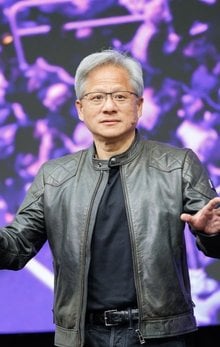
1. NVIDIA
Employees: 26,500
CEO: Jensen Huang
Founded: 1993
NVIDIA is at the forefront of the AI revolution in global telecommunications, providing the computing power that drives today’s most advanced AI models. Its accelerated computing platform, built on pioneering GPU technology, forms the backbone for training and deploying AI at scale.
Beyond hardware, NVIDIA delivers a complete AI platform for telcos, including the Aerial platform for AI-on-RAN, AI Enterprise software for development and Omniverse for creating digital twins of physical networks.
A central part of its strategy is the AI Factory initiative, developed with partners such as Orange, Swisscom and Telenor. It empowers telecom operators to design, control and sell their own AI services, enabling them to move beyond connectivity into enterprise-grade solutions.
With strategic partnerships across Cisco, Microsoft and leading hyperscalers, NVIDIA’s influence spans the entire ecosystem, positioning it as the driving force behind the telecom industry’s AI-powered transformation.
Company portals







Executives
Andy Jassy
President and CEO
Arvind Krishna
CEO
Christian Klein
CEO & Member of the Executive Board

Chuck Robbins
Chair and CEO

Clay Magouyrk
CEO
Jensen Huang
Founder and CEO
Julie Sweet
Chair
Marc Benioff
Chair & CEO

Mike Sicilia
Chief Executive Officer
Satya Nadella
Chairman and CEO
Sundar Pichai
CEO