The telecommunications sector is undergoing a profound shift. Once defined primarily by its role in providing connectivity, it is now positioned to become a central orchestrator of value in the rapidly expanding Internet of Things (IoT) ecosystem. No longer is it sufficient to connect devices; the challenge now lies in managing, securing and harnessing intelligence from billions of endpoints. With the global IoT platform market forecasted to reach US$35.1 billion by 2032, growing at a 13.2% annual rate, the scale of the opportunity is clear.
For Communications Service Providers (CSPs) and Mobile Network Operators (MNOs), the task is to rise above the commoditised role of connectivity and secure a stronger presence in the value chain. Telcos must determine whether to embrace platforms that empower them as digital service orchestrators or risk being reduced to low-margin “dumb pipes” in a market increasingly shaped by hyperscale cloud providers.
This week, Telco Magazine delves into the top 10 IoT connectivity providers.
10. Siemens
Founded: 1847
Annual Revenue: US$82.3bn
Chief Executive Officer: Roland Busch
Number of Employees: 327,00
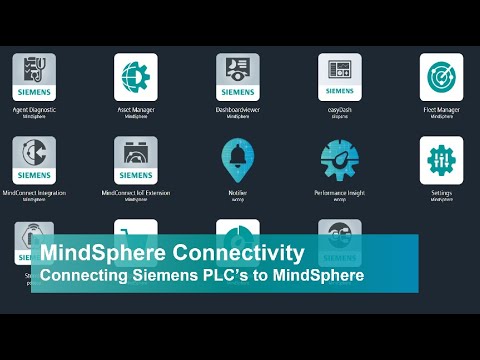
Siemens’ MindSphere is a leading Industrial IoT platform, uniquely combining deep OT expertise with 5G core integration for industrial use cases. Built on a hybrid, cloud-first architecture, it enables secure data ingestion from machinery to the cloud, powering analytics, predictive maintenance and energy optimisation.
Its seamless integration with Siemens hardware and global partner ecosystem sets it apart, with milestones including large-scale smart factory deployments.
For telcos, MindSphere offers a critical gateway to Industry 4.0, transforming connectivity into high-value vertical solutions.
9. IBM
Founded: 1911
Annual Revenue: US$62.7bn
Chief Executive Officer: Arvind Krishna
Number of Employees: 293,400
IBM’s Watson IoT Platform is a cloud-based service that connects, manages and analyses device data at scale, uniquely integrating with Watson AI for predictive insights and automation. Its 5G core role lies in enabling telcos to pair secure connectivity with advanced cognitive analytics, creating enterprise-grade IoT solutions.
Since its 2015 launch, it has achieved milestones in manufacturing, logistics and utilities, proving its value in mission-critical deployments. For telcos, Watson offers a powerful platform to transform networks into AI-driven service ecosystems.
8. Oracle
Founded: 1977
Annual Revenue: US$52.9bn
Co Chief Executive Officers: Clay Magouyrk and Mike Sicilia
Number of Employees: 159,000
Oracle’s IoT Intelligent Applications suite is a SaaS-based platform designed to link connected device data with core enterprise systems, uniquely integrated with Oracle’s SCM, ERP and HCM applications. Its 5G core role lies in enabling telcos to combine secure connectivity with direct business process automation, moving beyond data transport to measurable outcomes.
With milestones in smart manufacturing, logistics and asset monitoring, Oracle stands out for delivering pre-built, application-first IoT solutions, providing telcos with a strategic partner to unlock Industry 4.0 value.
7. Telefónica
Founded: 1924
Annual Revenue: US$44.7bn
Chief Executive Officer: Marc Murtra
Number of Employees 100,870
Telefónica Tech’s Kite Platform is a proprietary IoT connectivity solution that unifies global SIM management across 2G–5G, NB-IoT and LTE-M networks. Its 5G core enables telcos to combine secure, real-time connectivity with advanced analytics, device management and security.
Unique for being fully developed in-house, Kite offers enterprises a single, accountable partner for global IoT deployments.
Milestones include large-scale multinational rollouts and seamless integration with public clouds, positioning Telefónica as a strategic, vertically integrated player in the IoT ecosystem.
6. Deutsche Telekom
Founded: 1995
Annual Revenue: US$125.2bn
Chief Executive Officer: Timotheus Höttges
Number of Employees: ~200,000
Deutsche Telekom’s “Cloud of Things” is a cloud-based IoT platform that unifies device connectivity, monitoring and data visualisation, leveraging 5G core networks for secure, low-latency communication.
Unique for its user-friendly, scalable design and adherence to strict German data-hosting standards, it supports both SMEs and large enterprises alike. Milestones include the transatlantic T-IoT collaboration with T-Mobile, which enables seamless deployments in North America and Europe. By combining intuitive dashboards, carrier-grade security and extensive global coverage, Deutsche Telekom positions itself as a leading IoT connectivity partner for telcos and enterprises.
5. Cisco
Founded: 1984
Annual Revenue: US$53.8bn
Chief Executive Officer: Charles H. Robbins
Number of Employees: 90,400
Cisco’s IoT Control Center, formerly Jasper, is a leading cloud-based platform for managing massive-scale cellular IoT connectivity, leveraging 5G core networks for secure, low-latency operations.
Unique for its automation, real-time diagnostics and zero-touch provisioning, it enables telcos to offer branded IoT services without heavy R&D investment.
Milestones include powering AT&T’s Control Center and managing hundreds of millions of devices globally. Cisco’s platform combines networking, security and scalability, making it a critical enabler for mission-critical enterprise and telco IoT deployments.
4. AT&T
Founded: 1885 (as Bell Telephone, renamed AT&T)
Annual Revenue: US$122.3bn
Chief Executive Officer: John T. Stankey
Number of Employees: 140,990
AT&T Control Center, powered by Cisco, is a leading IoT connectivity platform that leverages AT&T’s extensive 5G and LPWA networks for secure, low-latency device management.
Unique for its real-time control, automated provisioning and advanced diagnostics, it enables scalable deployments across industries from smart factories to connected health.
Milestones include nationwide 5G integration and a mature enterprise ecosystem with certified devices and professional services. The platform exemplifies how a telco can leverage its network strength and managed IoT services to deliver high-value enterprise solutions.
3. Verizon
Founded: 2000 (merger of Bell Atlantic and GTE)
Annual Revenue: US$134.8bn
Chief Executive Officer: Hans Vestberg
Number of Employees: 99,600
Verizon’s ThingSpace is a comprehensive IoT connectivity platform that leverages LTE, NB-IoT and 5G core networks to deliver secure, low-latency enterprise-grade services. Unique for its end-to-end capabilities, including device certification, fleet management, APIs and a hardware marketplace, it simplifies the IoT lifecycle from development to monetisation.
Milestones include integration of AI-driven analytics and advanced security features, establishing Verizon as a trusted, vertically integrated partner. ThingSpace exemplifies how a telco can combine network excellence with managed IoT solutions for diverse industries.
2. Microsoft
Founded: 1975
Annual Revenue: US$261.8bn
Chief Executive Officer: Satya Nadella
Number of Employees: 228,000

Microsoft Azure IoT is a scalable, cloud- and edge-based platform that connects, monitors and manages billions of devices, leveraging 5G core networks for secure, low-latency enterprise applications.
Unique for its integration of IoT Hub, IoT Edge and Digital Twins, it enables real-time data processing, advanced analytics and digital modelling of physical environments.
Milestones include widespread adoption across enterprise sectors and deployment on mobile edge computing infrastructure.
For telcos, Azure IoT provides a critical foundation to deliver next-generation, AI-driven services, combining cloud intelligence with the performance and reach of its 5G networks.
1. AWS
Founded: 1994
Annual Revenue: US$637.9bn
Chief Executive Officer: Matt Garman
Number of Employees: 1,556,000

Amazon Web Services (AWS) IoT is a market-leading platform that connects, manages and secures billions of devices, leveraging 5G core networks for low-latency, enterprise-grade applications. Unique for its modular architecture, including IoT Core, Greengrass and Device Defender, it enables edge computing, real-time analytics and over-the-air device management.
Milestones include deployment across industrial, logistics and smart city applications, as well as supporting telcos in building branded IoT services. For telecommunications providers, AWS IoT serves as a foundational, scalable infrastructure that combines cloud intelligence with network connectivity to deliver differentiated, high-value IoT solutions at a global scale.
Company portals





Executives

Arvind Krishna
CEO

Chuck Robbins
Chair and CEO

Clay Magouyrk
CEO
Hans Vestberg
Chairman and CEO
Marc Murtra Millar
Chair and CEO
Matt Garman
Chief Executive Officer

Mike Sicilia
Chief Executive Officer
Roland Busch
President and CEO of Siemens AG
Satya Nadella
Chairman and CEO