
Top 10: Telco Billing Solutions
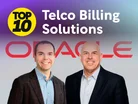
In today’s telecommunications landscape, billing has evolved from a back-office process into monetisation, a strategic capability central to growth in the 5G era. As service providers transition into technology-driven businesses, they must monetise significant network investments, manage complex enterprise ecosystems and compete with agile digital players.
Modern monetisation demands more than accurate billing. It needs cloud-native, scalable, AI-enabled platforms capable of real-time charging, network slicing and multi-party settlements.
Service providers typically follow one of three strategic paths: partnering with specialised vendors that offer deep industry expertise but limited scale; adopting large enterprise platforms that provide integration and stability but risk dependency; or aligning with hyperscalers to gain agility and advanced AI tools, though at the cost of maturity and control.
There is no universal solution. Each provider must align its monetisation strategy with its goals, as in the 5G era, monetisation defines competitive advantage.
This week, Telco Magazine explores the top 10 telco billing solutions.
10. Nokia
- Founded: 1865
- Revenue: €19.22bn (US$22.2bn) (2024)
- Chief Executive Officer: Justin Hotard
- Employees: 78,434
With a long heritage in telecommunications, Nokia brings deep expertise to telco billing and monetisation solutions. Its focus lies in enabling cloud-native, agile and partner-driven BSS ecosystems. Through strategic collaborations with industry specialists, Nokia delivers pre-integrated, end-to-end digital BSS platforms that combine its 5G charging capabilities with a flexible and scalable architecture.
The unique approach allows communications service providers to accelerate deployment, unlock new 5G enterprise opportunities and efficiently manage complex digital service lifecycles, marking key milestones in telecom monetisation innovation.
9. Hewlett Packard Enterprise (HPE)
- Founded: 2015 (as Hewlett Packard Enterprise)
- Revenue: US$30.13bn (Fiscal Year 2024)
- Chief Executive Officer: Antonio Neri
- Employees: 61,000
Hewlett Packard Enterprises (HPE) plays a pivotal role in driving telco billing transformation, acting as a catalyst for monetisation through its focus on infrastructure and automation. Rather than offering a traditional billing system, HPE delivers Telco Core and Telco Automation solutions that unify network and IT operations on open, cloud-native platforms.
Its AI-powered Telco Intelligent Assurance converts network data into actionable insights, enhancing service quality, reliability and efficiency. These are key milestones in enabling faster, smarter and more secure 5G monetisation.
8. Accenture
- Founded: 1989
- Revenue: US$64.90bn (2024)
- Chief Executive Officer: Julie Sweet
- Employees: 774,000 (2024)
Accenture plays a leading role in telco billing transformation, combining software implementation with strategic expertise to drive transformation. Rather than selling a traditional billing solution, it partners with service providers to reinvent revenue-generating processes.
Leveraging deep industry knowledge, AI-driven data strategies and collaborations with hyperscalers and other vendors, Accenture helps telcos modernise legacy BSS, optimise costs and build agile, customer-centric operating models. Its approach has delivered key milestones in enabling flexible, future-ready monetisation and operational excellence across the telecommunications sector.
7. Microsoft
- Founded: 1975
- Revenue: US$236.6bn
- Chief Executive Officer: Satya Nadella
- Employees: 221,000
Microsoft plays a transformative role in telco billing solutions, combining core platform capabilities with direct billing relationships. Through its Azure cloud, it provides hyperscale infrastructure, AI and data services to power next-generation BSS.
Its expansion into Unified Communications as a Service (UCaaS) enables telcos to bundle services with direct billing via Microsoft’s APIs, creating new revenue models. Its unique approach has achieved key milestones in modernising monetisation, enhancing agility and reshaping the telco value chain for the digital era.
6. IBM
- Founded: 1911
- Revenue: US$62.75bn (2024)
- Chief Executive Officer: Arvind Krishna
- Employees: 282,200
IBM is a leading driver of telco billing transformation, offering a unique combination of cloud-based technology and consulting expertise. Its POWER BSS platform supports the entire customer lifecycle, from management and automation to rating, invoicing and financial accounting, while handling massive transaction volumes.
Backed by hybrid cloud infrastructure and an extensive partner network, IBM delivers fully integrated, eTOM-compliant BSS/OSS solutions. Its full-stack approach provides service providers with a single, accountable partner, enabling them to achieve significant milestones in modernising billing and monetisation processes.
5. Salesforce
- Founded: 1999
- Revenue: US$37.89bn (2024)
- Chief Executive Officer: Marc Benioff
- Employees: 76,453 (2025)
Salesforce plays a pivotal role in telco billing solutions, uniquely anchoring its BSS platform in a world-leading CRM. The Communications Cloud puts the customer at the centre of the revenue process, integrating with its Revenue Cloud to manage the entire quote-to-cash and billing lifecycle for subscription and usage-based services.
Its use of generative AI to resolve billing inquiries and detect anomalies has transformed support efficiency. For service providers focused on customer experience and reducing churn, Salesforce demonstrates that billing can be seamlessly integrated with CRM, achieving key milestones in modernising monetisation.
4. SAP
- Founded: 1972
- Revenue: US$36.76bn (2024)
- Chief Executive Officer: Christian Klein
- Employees: 109,973 (2024)
SAP drives Telco Billing Solutions through its integrated SAP Billing and Revenue Innovation Management (BRIM). Beyond a typical BSS module, BRIM is embedded within S/4HANA, enabling telecom operators to monetise services, rate usage and manage billing while connecting revenue to finance seamlessly. It eliminates data silos, provides a single source of truth and supports complex 5G and B2B2X ecosystems.
SAP’s milestones include successful deployments for major CSPs worldwide, demonstrating scalability and innovation.
3. Ericsson
- Founded: 1876
- Revenue: US$23.45bn (2024)
- Chief Executive Officer: Börje Ekholm
- Employees: 99,952 (2023)
Ericsson leverages its century-long telecom expertise to drive Telco Billing Solutions through its Digital BSS platform. Purpose-built for CSPs, it enables monetisation of 5G services, network slicing and enterprise offerings, while delivering seamless service orchestration. Cloud-native, open and AI-driven, the platform reduces time-to-revenue and enhances operational agility.
Ericsson’s solution uniquely integrates the network core with customer billing, providing CSPs with a single, streamlined revenue chain. Milestones include successful deployments supporting complex, network-led business models worldwide.
2. NEC Corporation (Netcracker)
- Founded: 1899
- Revenue: ¥3,423.4bn (approx. US$22.7bn) (Fiscal Year ended Mar. 31, 2025)
- Chief Executive Officer: Takayuki Morita
- Employees: 104,194 (As of Mar. 31, 2025)

NEC, through its subsidiary Netcracker Technology, drives Telco Billing Solutions with its leading-edge Netcracker Cloud BSS platform. Recognised globally for BSS/OSS expertise, Netcracker provides a comprehensive, cloud-native solution supporting end-to-end digital transformation.
The platform covers the full lead-to-cash process across Marketing and Commerce, Sales and Customer Service and Revenue Management Clouds. It enables new revenue streams, real-time 5G charging, complex B2B2X models and dynamic multi-partner settlements.
Delivered as SaaS on public cloud, it offers CSPs both agility and functional depth, helping them become disruptive digital players. Key milestones include successful global deployments for major CSPs, demonstrating scalability, innovation and a proven ability to integrate network, service, as well as revenue operations seamlessly.
1. Oracle
- Founded: 1977
- Revenue: US$54.93bn (Fiscal Year 2024)
- Chief Executive Officer: Clay Magouyrk and Mike Sicilia (co-CEOs)
- Employees: 162,000 (2025)
Oracle drives Telco Billing Solutions through its carrier-grade, cloud-native Oracle Communications Billing and Revenue Management (BRM) platform.
By design, BRM manages the entire revenue lifecycle – from charging and mediation to invoicing, collections and revenue assurance, supporting high-scale 5G monetisation, flexible subscription models and complex B2B2X partner settlements.
Serving more than 5 billion subscribers worldwide, it sets the benchmark for telco monetisation. Delivered with the agility of Oracle Cloud Infrastructure, the platform empowers CSPs to innovate and scale rapidly.
Key milestones include extensive global deployments and a strategic leadership update in September 2025, elevating the heads of OCI and Oracle Industries to co-CEOs, signalling a clear commitment to cloud-first, industry-specific solutions that directly link network operations to revenue generation.
Company portals





Executives
Antonio Neri
President & CEO

Arvind Krishna
CEO
Börje Ekholm
President and CEO
Christian Klein
CEO & Member of the Executive Board

Clay Magouyrk
CEO
Julie Sweet
Chair
Justin Hotard
President and CEO
Marc Benioff
Chair & CEO

Mike Sicilia
Chief Executive Officer
Satya Nadella
Chairman and CEO
Takayuki Morita
President and CEO (Representative Director)