In today’s telecommunications landscape, expense management has become a burgeoning strategic priority. Leading operators are leveraging AI and machine learning to automate invoice validation, optimise cloud consumption and reconcile complex interconnect charges. The capabilities enable telcos to transform vast operational data into actionable insights, reduce inefficiencies and unlock new value streams.
By integrating network and IT finances and tracking both costs and carbon impact, modern expense management supports profitability, operational resilience and sustainability, ensuring that operators can navigate the capital-intensive demands of 5G, Open RAN and cloud-native infrastructures without compromising financial control or strategic agility.
This week, Telco Magazine explores the top 10 expense management tools
10. CGI Inc.
Founding: 1976
Revenue: US$10.9bn
Chief Executive Officer: François Boulanger
Number of Employees: 94,000
CGI occupies a distinctive niche in expense management, delivering high-touch, IT-driven tools tailored to the complex, regulated telecoms sector. Rather than relying solely on automation, CGI’s Business Engineering approach blends proprietary platforms, such as CGI Advantage, with expert-led Telecom Expense Management services.
The model has achieved notable milestones, including significant savings from invoice audits and substantial reductions in “zombie” services. By cleansing legacy data and aligning expenses with regulatory requirements, CGI enables telecom operators to transform financial governance and fund future digital initiatives.
9. Tech Mahindra
Founding: 1986
Revenue: US$6.4bn
Chief Executive Officer: Mohit Joshi
Number of Employees: 114,318
Tech Mahindra brings telecom-native expertise to expense management, using tools such as its iCOPS platform to unite Finance and Operations in cloud-driven networks. Unlike traditional invoice-centric systems, iCOPS applies FinOps and AIOps to predict and control costs across hybrid and 5G environments.
Its approach has delivered milestones, including automated cash-management engines powered by generative AI and improved cost integrity across virtualised network functions.
By aligning operational consumption with financial accountability, Tech Mahindra helps operators manage variability and fund transformation at speed.
8. Wipro Limited
Founding: 1945
Revenue: US$11bn
Chief Executive Officer: Srini Pallia
Number of Employees: 233,346
Wipro Limited drives expense-management modernisation through its Way2Go platform, a mobile-first, cloud-native tool that eliminates the friction of legacy systems. Its advanced OCR, real-time AI audit rules and predictive analytics ensure accurate, compliant and rapid expense processing across diverse telecom workforces.
Uniquely, Wipro pairs the platform with a large Business Process Services engine capable of managing millions of invoices. The combination has delivered major milestones, including higher adoption, stronger compliance and significantly improved visibility of operational spend. It ensures modernisation of expense management through its Way2Go platform, a mobile-first, cloud-native tool that eliminates the friction of legacy systems.
7. Infosys
Founding: 1981
Revenue: US$19.7bn
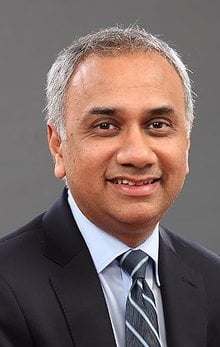
Chief Executive Officer: Salil Parekh
Number of Employees: 317,240
Infosys advances expense management through its Cloud and Telecom Expense Management Solution (CTEMS), a platform-agnostic layer that unifies telecom inventory and spend into a single source of truth.
Unlike generic finance tools, CTEMS applies big-data analytics and Topaz AI models to detect billing errors with near-perfect accuracy, turning reconciliation into value recovery. By building a precise “Golden Record” of network assets, Infosys has helped clients eliminate dormant services and recover substantial costs, enabling smarter contracting and future optimisation.
6. Tata Consultancy Services (TCS)
Founding: 1968
Revenue: US$29bn
Chief Executive Officer K. Krithivasan
Number of Employees: ~601,546
Tata Consultancy Services advances expense management through its cloud-native HOBS platform, which treats financial control as an integral part of Business Assurance rather than an isolated function. With native visibility across OSS/BSS, HOBS enables precise cost validation, revenue protection and automated optimisation. Supported by TCS’s Cognitive Business Operations engine, it processes billions of invoices with increasing levels of zero-touch automation.
Milestones include AI-driven asset-expense reduction using machine-vision inspections and tighter synchronisation of cash flow through linked order-to-cash and procure-to-pay cycles.
5. Workday, Inc.
Founding: 2005
Revenue: US$8.4bn
Chief Executive Officer: Carl Eschenbach
Number of Employees: ~20,482
Workday strengthens telecom expense management through its unified Enterprise Management Cloud, where its “Power of One” architecture links employee data, project assignments and financial controls in a single model. Its Workday Expenses module uses mobile-first design and AI automation to itemise receipts, detect risk and streamline approvals with exceptional accuracy.
Its unified approach has enabled telcos to maintain compliance through complex workforce rules, reconfigure organisations rapidly during restructuring and gain real-time visibility to control spend more effectively.
4. Accenture
Founding: 1989
Revenue: US$69.6bn
Chief Executive Officer: Julie Sweet
Number of Employees: 779,000
Accenture elevates telecom expense management through SynOps, its AI-driven orchestration engine that unifies data across disparate finance, procurement and IT systems. Rather than treating expenses in isolation, Accenture embeds them within broader transformation, optimising source-to-pay processes and indirect spend through deep category expertise.
SynOps automates invoice handling, vendor queries and payment timing, delivering outcome-based savings. Milestones include improved spend visibility across complex tech ecosystems and the application of zero-based budgeting to unlock capital for network investment.
Accenture elevates telecom expense management by embedding expenses within broader transformation, optimising source-to-pay processes and indirect spend through deep category expertise. It unifies data across disparate finance, procurement and IT systems via SynOps, its AI-driven orchestration engine.
3. Oracle
Founding: 1977
Revenue: US$53bn
Chief Executive Officer: Clay Magouyrk & Mike Sicilia
Number of Employees: 162,000
Oracle strengthens telecom expense management through its vertically integrated stack, linking network activity directly to financial control via Fusion Cloud ERP. Its expense module uses ML-driven audit, digital assistants and automated policy enforcement to enhance accuracy and reduce leakage.
Uniquely, Oracle ties expenses to Project Portfolio Management, enabling precise OpEx–CapEx allocation for large network builds. This integration has delivered milestones such as real-time cost capitalisation, granular profitability insight and streamlined compliance across high-volume telecom operations.
2. American Express
Founding; 1850
Revenue: US$65.9bn
Chief Executive Officer: Stephen J. Squeri
Number of Employees: 75,100

American Express plays a pivotal role in transforming telecom expense management by providing the financial rails on which corporate spend moves. Its corporate payment tools, including virtual card technology such as vPayment, give telcos secure, single-use payment options that prevent fraud and automate reconciliation.
Amex’s closed-loop network delivers rich, transaction-level data that enhances audit accuracy and real-time visibility. In telecom operations, its solutions support rapid, controlled emergency procurement and strengthen working-capital management through extended settlement cycles.
Milestones include large-scale adoption of virtual payments, deeper integration with enterprise systems and demonstrable improvements in supplier satisfaction, spend transparency and financial control across complex fast-moving field environments.
1. SAP (Concur)
Founding: 1972
Revenue: US$37bn
Chief Executive Officer: Christian Klein
Number of Employees: 107,155
SAP drives telecom expense management through its SAP Concur platform, seamlessly integrated with SAP S/4HANA financials to ensure data integrity and workflow continuity. Concur unifies travel, expense, and invoice data, capturing spend from multiple sources while using AI-powered Concur Detect to audit every transaction for compliance and fraud. Unique features include ExpenseIt for automatic receipt capture, GPS-based mileage tracking, and contractor expense management via Fieldglass.
Milestones include improved spend visibility across employees and contractors, enhanced policy enforcement and the pioneering of Green Ledger accounting to track carbon footprints.
SAP’s ecosystem approach connects suppliers, credit cards and duty-of-care partners, delivering both operational control and strategic sustainability insights to telecom operators.
Company portals







Executives

Carl Eschenbach
Chief Executive Officer
Christian Klein
CEO & Member of the Executive Board

Clay Magouyrk
CEO
Francois Boulanger
President and Chief Executive Officer at CGI
Julie Sweet
Chair
K Krithivasan
Chief Executive Officer & Managing Director

Mike Sicilia
Chief Executive Officer
Mohit Joshi
CEO and Managing Director
Salil Parekh
Chief Executive Officer and Managing Director
Srini Pallia
CEO and Managing Director

Stephen J. Squeri