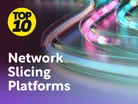
Top 10: Networking Slicing Platforms
Network slicing platforms represent a revolutionary approach in modern telecommunication networks, particularly within 5G architecture. The platforms enable the creation of multiple, virtual and independent networks on a shared physical infrastructure, tailored to specific applications, industries or service requirements.
Leveraging technologies such as Software-Defined Networking (SDN) and Network Functions Virtualisation (NFV), network slicing provides customised, secure and high-performance connectivity, optimising resource use and enabling rapid service deployment.
This capability supports diverse use cases ranging from IoT and autonomous vehicles to industry automation and critical communications, making network slicing a cornerstone of future-ready telecommunication networks.
This week, Telco Magazine looks at the top 10 network slicing platforms.
10. BT Group (UK)
- Founded: 1846
- Revenue: US$25bn
- CEO: Allison Kirkby
- Employees: 100,000+
BT Group, one of the UK’s largest fixed and mobile telecoms providers, serves over 30 million customers nationwide. As a top-tier leader in network slicing platforms, it is actively shaping how 5G Standalone delivers dedicated, high-performance connectivity for enterprises.
BT’s uniqueness lies in real-world deployments and trials, including the UK’s first live 5G SA network slicing at the Belfast Christmas Market and earlier multi-slice demonstrations at Adastral Park for gaming, enterprise and enhanced mobile broadband use cases.
9. Juniper Networks (USA)
- Founded: 1996
- Revenue: US$5.3bn
- CEO: Rami Rahim
- Employees: ~10,000
Juniper Networks powers advanced network slicing platforms by integrating Software Defined Networking, 5G and cloud-native architectures for seamless end-to-end slice orchestration and assurance. Its open, multi-domain Service Management and Orchestration, RAN Intelligent Controller and node-slicing enable precise service isolation and SLA control. With early 5G slicing trials, O-RAN aligned deployments and large-scale multi-tenant automation, Juniper supports scalable, intelligent slicing across complex networks.
8. T-Mobile (USA)
- Founded: 1990 (as VoiceStream Wireless)
- Revenue: US$81bn
- CEO: Srini Gopalan
- Employees: 70,000
T-Mobile leads in network slicing platforms by leveraging its nationwide 5G Standalone network to deliver dedicated, high-performance slices for enterprise use. It uniquely blends public and private 5G to create hybrid networks that support ultra-reliable, low-latency applications.
Key developments include early nationwide slicing launches, T-Priority slices for public safety and large-scale deployments for live events and media broadcasting, positioning T-Mobile as a strong player in scalable, use-case-driven 5G slicing innovation.
7. NTT (Japan)
- Founded: 1952
- Revenue: US$105bn
- CEO: Jun Sawada
- Employees: 300,000+
NTT drives network slicing platforms with AI-driven orchestration that dynamically optimises performance, quality and cost across complex, multi-domain 5G and cloud infrastructures. It focuses on end-to-end automation, hybrid cloud integration and low-latency, edge-based services tailored to enterprise and carrier needs.
NTT stands out with multivendor slicing proofs of concept and award-winning AI-based optimisation and assurance. These capabilities position NTT as a leader in delivering flexible, intelligent slicing across large-scale, cloud-native networks.
6. Samsung Electronics (South Korea)
- Founded: 1938
- Revenue: US$240bn
- CEO: Han Jong-hee
- Employees: ~275,000
Samsung is a global leader in 5G infrastructure, providing integrated hardware and software for advanced network slicing. Its key role in driving network slicing platforms centres on end-to-end, cloud-native solutions spanning RAN, transport and core, enabling dynamic, automated slice creation and lifecycle management for diverse enterprise services. Samsung is distinctive in offering predefined slice templates, AI/ML-based RAN optimisation and SLA-backed slicing.
Milestones include multi-operator trials, end-to-end commercial slice demonstrations and zero-touch orchestration for new 5G business models.
5. ZTE Corporation (China)
- Founded: 1985
- Revenue: US$17.5bn
- CEO: Xu Ziyang
- Employees: 80,000+
ZTE delivers end-to-end 5G network slicing platforms with cloud-native cores, template-based slice design and AI-driven closed-loop automation, enabling fast, on-demand deployment for operators and enterprises.
Its Network Slice as a Service model and online Slicing Store allow customers to customise private 5G slices in minutes. ZTE also leads with carrier-grade DevOps and early commercial slicing trials for smart manufacturing and other low-latency use cases, positioning it as a key enabler of scalable, vertical-specific 5G slicing solutions.
4. Cisco Systems (USA)
- Founded: 1984
- Revenue: US$65bn
- CEO: Chuck Robbins
- Employees: 83,000
Cisco is a global leader in networking, providing automation and orchestration platforms for operators and enterprises. It plays a central role in driving network slicing platforms through intent-based transport slicing, lifecycle automation and cross-domain orchestration tailored for IoT, connected vehicles and advanced enterprise services. Cisco is distinctive in combining segment-routing-based transport slices with service assurance and rich APIs. Milestones include multivendor slicing proofs of concept, large operator trials and continuous enhancements to its controller and orchestrator portfolio.
3. Nokia (Finland)
- Founded: 1865
- Revenue: US$21bn
- CEO: Justin Hotard
- Employees: 90,000
Nokia delivers end-to-end 5G network slicing across radio access, core, transport and orchestration, supported by AIOps-powered analytics. Its network slicing platform focuses on intent-based slice design, closed-loop automation and assurance to enhance SLA compliance and operational efficiency.
The company stands out with on-demand slicing for smartphones, edge slicing for VPN-style enterprise services and multi-access edge support. Key milestones include early end-to-end slicing implementations and global trials with major operators, demonstrating scalable, service-aware slicing for diverse 5G use cases.
2. Huawei Technologies (China)
- Founded: 1987
- Revenue: US$118bn
- CEO: Ren Zhengfei
- Employees: 209,000

Huawei delivers a comprehensive network slicing platform built on its CloudMatrix and Pangu systems, combining AI-native infrastructure, foundation models and large-scale 5G core networks.
It enables fully isolated, SLA-aware slices tailored to diverse industry needs. Huawei focuses on end-to-end automation and intent-driven design to support real-time, low-latency services. Its distinctive approach includes FlexE-based X-Haul slicing and smart grid deployments.
Large-scale trials with operators such as China Telecom highlight the platform’s mission-critical performance. By aligning slicing with industry-specific requirements, Huawei positions itself as a key provider of intelligent, scalable 5G slicing for enterprise and industrial applications.
1. Ericsson (Sweden)
- Founded: 1876
- Annual Revenue: US$24bn
- CEO: Börje Ekholm
- Employees: 99,000

Ericsson delivers a dynamic network slicing platform that tightly integrates 5G Core and RAN to provide end-to-end, on-demand slices for consumers and enterprises. Its platform features modular orchestration, closed-loop assurance and OSS/BSS integration, enabling operators to monetise differentiated connectivity at scale.
The company is distinctive in its support for the Android device ecosystem, enabling consumer slicing alongside advanced enterprise use cases. Key milestones include large-scale proofs of concept and live trials with major operators.
By combining technical depth with commercial readiness, Ericsson positions itself as a key provider of flexible, production-ready network slicing across a wide range of sectors.
Company portals




Executives
Allison Kirkby
Chief Executive
Börje Ekholm
President and CEO

Chuck Robbins
Chair and CEO
Justin Hotard
President and CEO

Srini Gopalan
CEO